
Written By: Melissa Higgins and Sean Plaistowe
“I remember playing with a View Master before, during my childhood when I was in Togo in West Africa. I looked at photos featuring animals and nature using a View Master. It was a present I got from a special occasion, like Christmas—because back then me and my friends were “little engineers” and we usually made our own toys and cars. Today, I am actually a real engineer in the IT field!”
Dodji, Museum Visitor
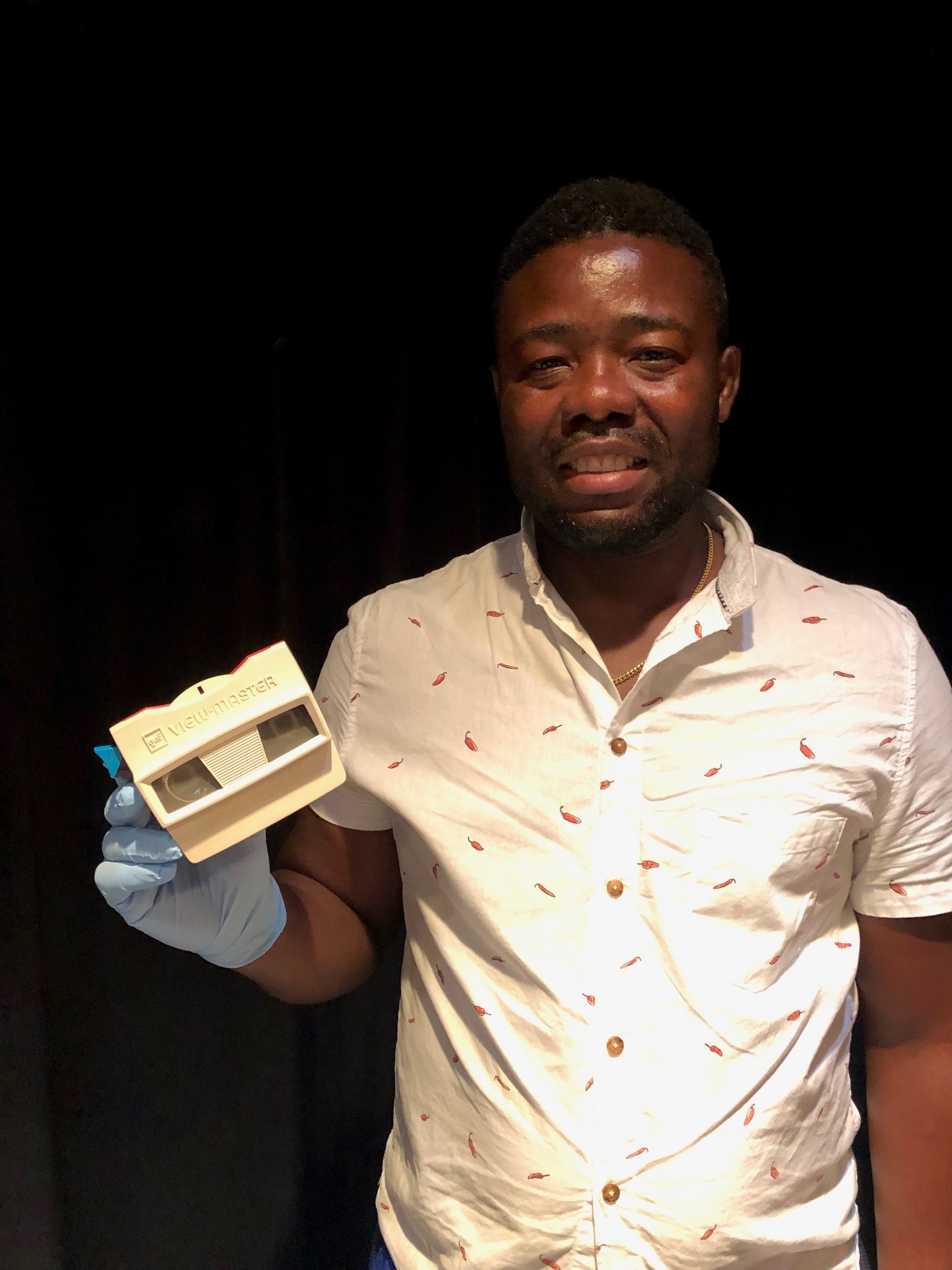
Like Dodji indicates above, many people have strong memories tied to objects from their childhood. Sometimes the object might be a toy, other times it might be a kitchen tool or a decorative item that holds special meaning. Recently, thanks to a grant from the National Endowment for Humanities, Boston Children’s Museum was able to gather some of the memories from visitors related to these types of special objects, which are part of the Museum’s Collection.
Boston Children’s Museum’s Collection is a somewhat hidden treasure. Beginning in 1913, the Museum began collecting objects ranging from natural history specimens to objects of American history, global cultural materials, and beyond. A museum collection consists of a vast range of belongings that museums gather, safeguard, and make accessible for visitors to explore for inspiration, learning, and enjoyment. Different types of museums collect different objects. An art museum might collect paintings and sculptures, while a science museum might focus more on natural history specimens. In Boston Children’s Museum’s early days, our Collection focused more on natural science materialism, such as shells, rocks, and even taxidermy animals. Later, we began to expand the Collection to include toys, games, and cultural materials from across North America and the globe. While collections are more common in art or science museums, there are only a few children’s museums across the country that have a collection.
At Boston Children’s Museum, you’ll find Collection objects displayed all around the building if you look carefully. In between the hallways and exhibit spaces are “windows” that are actually display cases for Collections objects. Until recently, these Collections objects were mostly displayed on their own, or coupled with other objects to convey a specific theme. Now, some objects are accompanied by personal stories, memories, and anecdotes. In the fall, Boston Children’s Museum ran several programs in which we shared some Collections objects with visitors and asked them to share stories or memories related to any objects that felt particularly relevant to them.
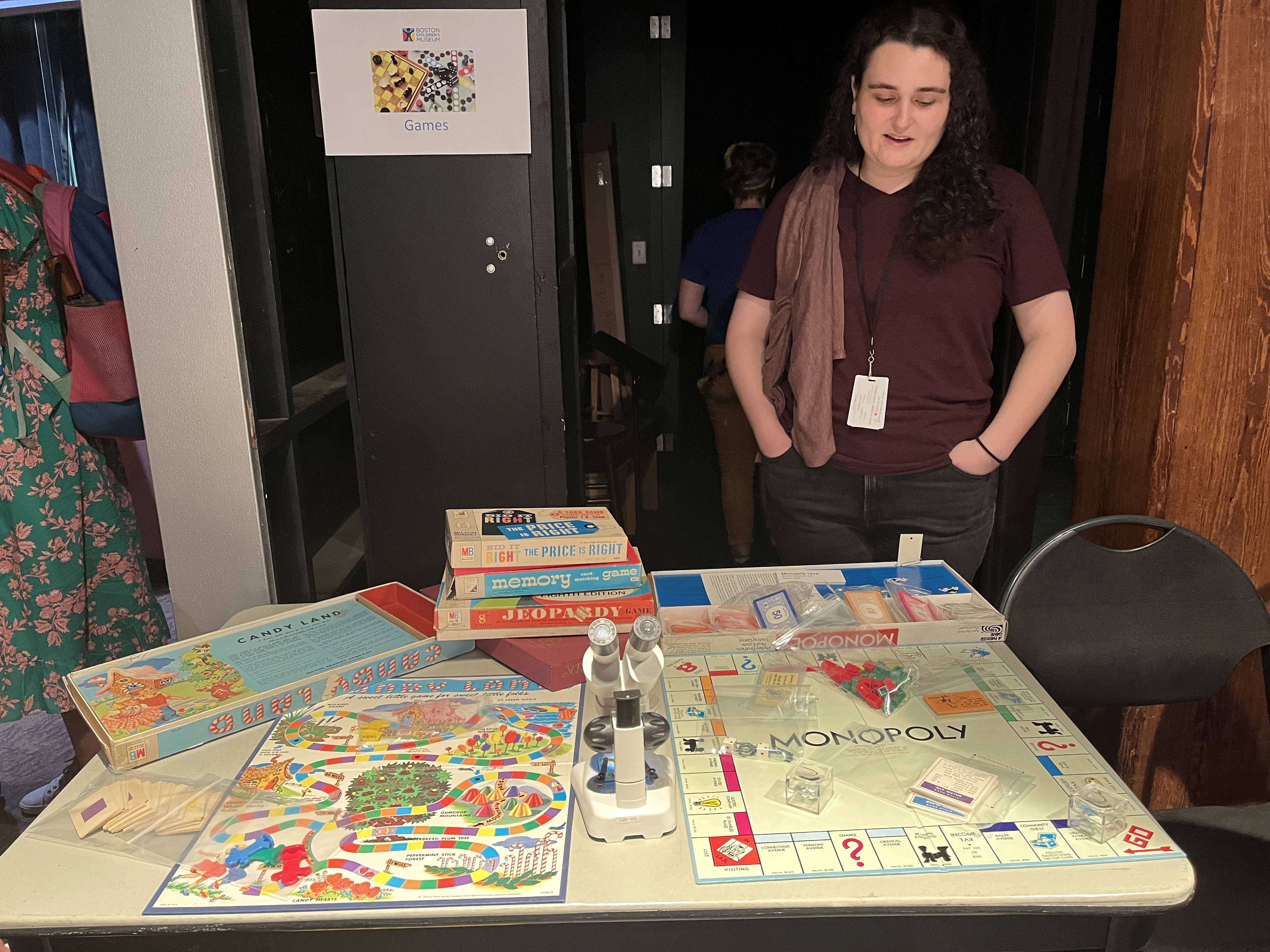
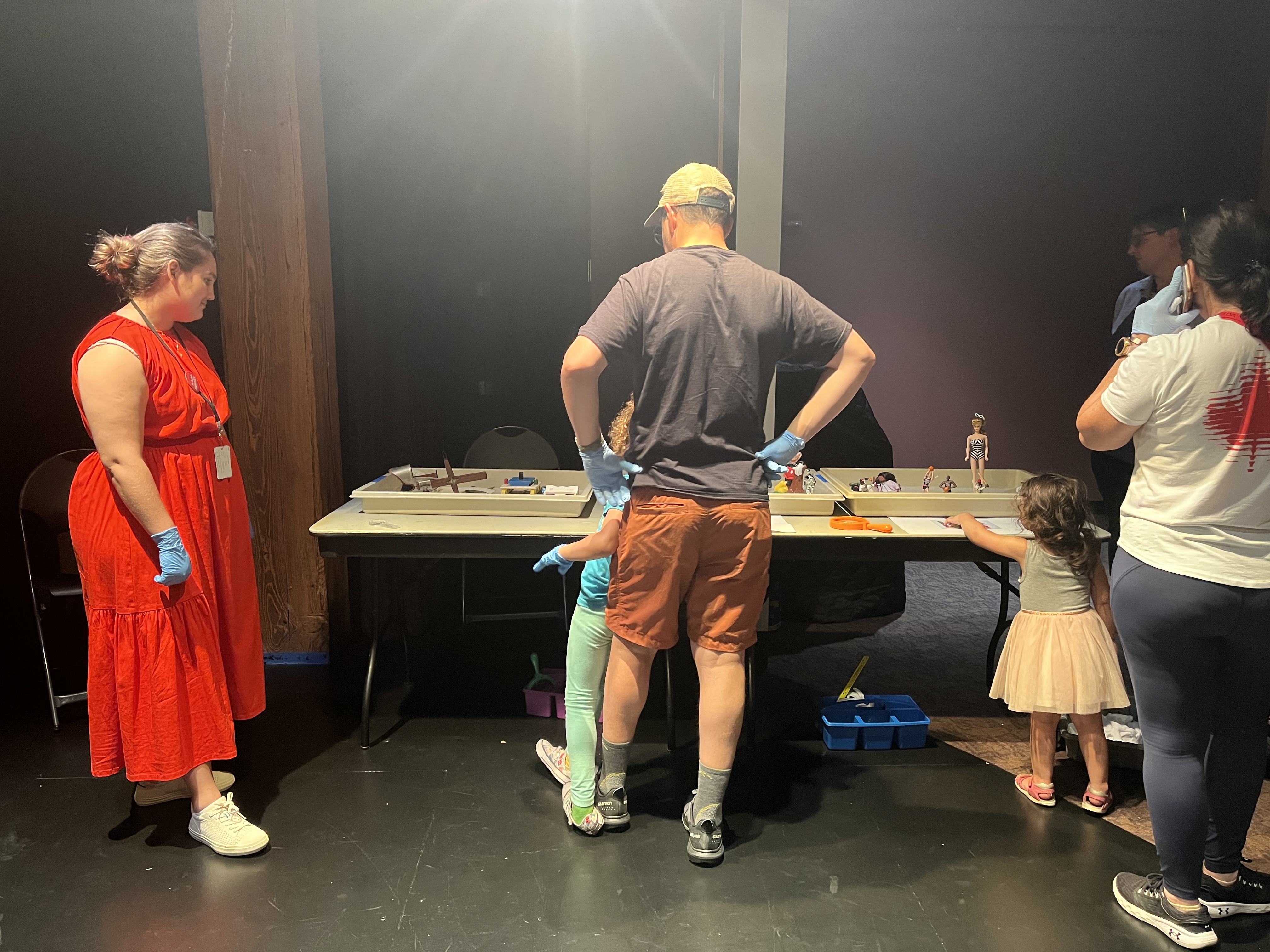
Dodji’s quote above is just one example of the types of memories that were shared with us. Lia, who was visiting the Museum through her internship program, shared a story about an object of particular meaning for her – a musical instrument called a guerra.

“I gasped when I saw the güira! It is a musical instrument in which people use a fork-like brush to make sounds, and it is common in a lot of Dominican households. It might sound interesting when I tried it, but people were able to make music with it! People would also use other sounds such as drums and maracas to make music and sing too.”
– Lia, Museum Visitor
Even those of us who work here at the Museum and get to see Collections objects regularly still experience meaningful connections with the special objects we care for! It’s always a delight when we have those moments, and even better when we can see visitor connections come to life!
“As a staff person at the Museum, I’m lucky enough to see amazing “a-ha” moments for kids and families all the time. The types of interactions that you know are meaningful because someone’s face is glowing, or the joy someone experiences is audible. Even with the opportunity to see those moments on a somewhat regular basis, I was still surprised by the happiness that sharing these stories brought to our visitors. Upon reflection, though, I realized I should not have been surprised by these visceral, visible reactions. I’ve had the same experience myself. I remember the joy of opening a Collections drawer and finding three Cabbage Patch Kids, two of which looked just like ones I had as a child. For those interested, I can confirm that the sense-memory experience of Cabbage Patch kids is retained–they still smell the same as you might remember. Amongst the connections between memories and objects there is joy, and the Museum looks forward to sharing more of these stories through Collections objects in the future.” – Melissa Higgins, Vice President of Programs and Exhibits
“As a Collections and Archives staff member, the most enjoyable part of my job is sharing our Collection with the public. However, this sharing usually takes the form of more of a role of directed discovery. Commonly, I will find objects in response to a need, whether a display or a research question. I always greatly enjoy providing the correct document or object to answer a question or complete a display and learning along the way. However, with this project, I got to help facilitate a more open-ended exploration that allowed families to explore various topics. Far from leading to answers, these explorations led to questions and conversations between visitors about their connections and memories associated with these seemingly innocuous bits of history. These family’s explorations of the Collection led to the sharing of stories of long-passed family members and half-forgotten stories, dreams, and ambitions that were being shared with their kids, partners, siblings, or friends for the first time. In their hands, these Collection objects came alive in a way that years of quiet preservation and documentation in storage could never replicate. The echoes of these stories and interactions still strike me when I walk by these objects in storage. It warms my heart that they facilitated the passage of these personal histories, some of which we are privileged to share in our displays, but also so many other snippets of history that were remembered and shared among families.” – Sean Plaistowe, Director of Collections and Archives
You can read more Collections stories from our visitors here: https://bostonchildrensmuseum.org/room-that-lives/ and if you’re in the Museum, head over to the You, Me, We exhibit to see some of these stories and the Collections objects that inspired them! To learn more about Boston Children’s Museum’s Collection, visit: https://bostonchildrensmuseum.org/about/collections/
This blog has been made possible in part by the National Endowment for the Humanities. Any views, findings, conclusions, or recommendations expressed in this webpage, do not necessarily represent those of the National Endowment for the Humanities.

 The Power of Play