
MIT’s Early Childhood Cognition Lab Conducts Research at Boston Children’s Museum
Written By: Lok-Wah Li
What are they thinking?!?
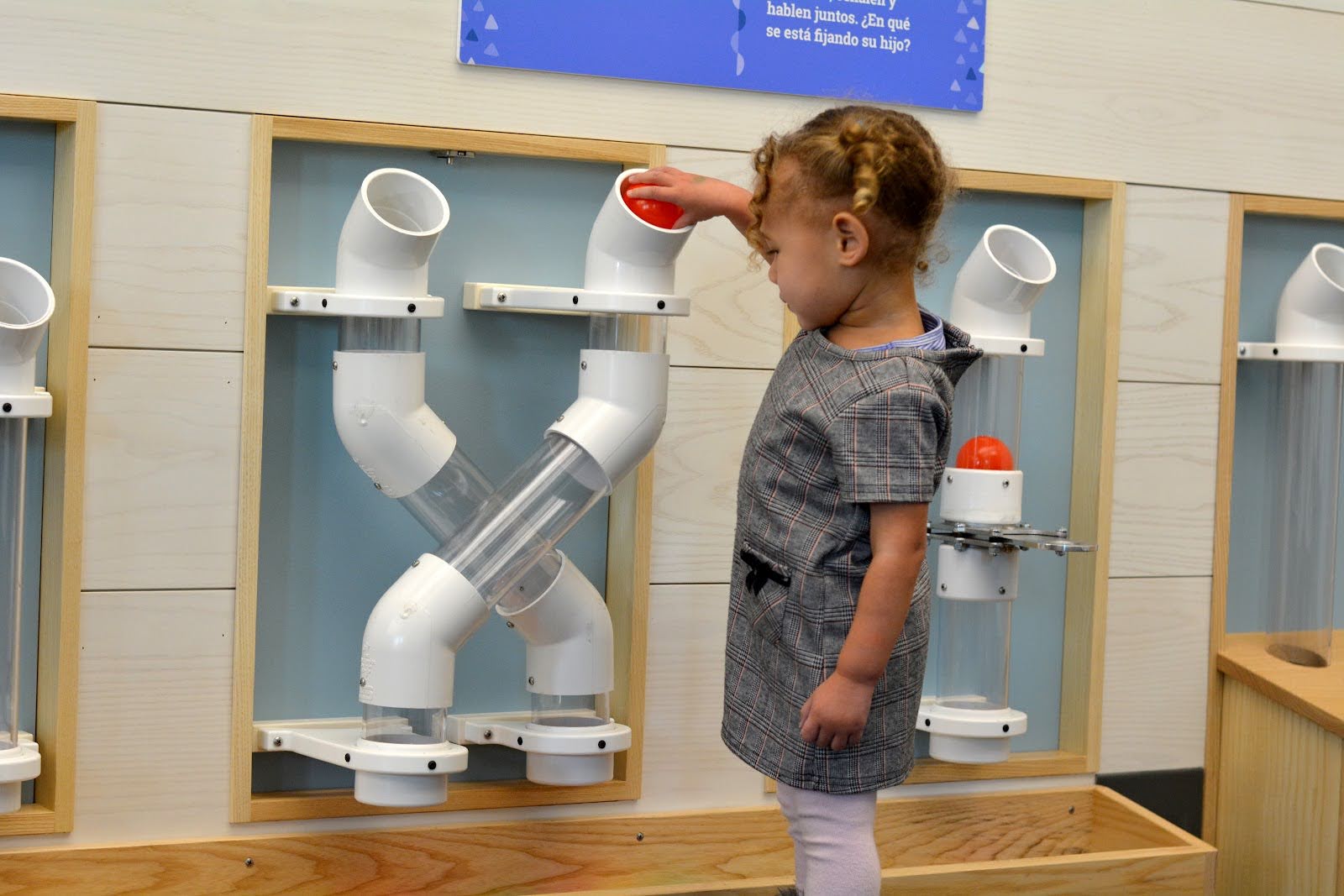
A toddler picks up a ball and puts it through a tube. The ball drops into a trough while the child stares—eyes wide open. What could the child be thinking at this moment?
A young child wraps a piece of tape around a twig to secure it in place. Another child stands a few steps behind, watching how the tape is applied to the larger twig structure. What is going through the second child’s mind? How will that child decide what to do next?
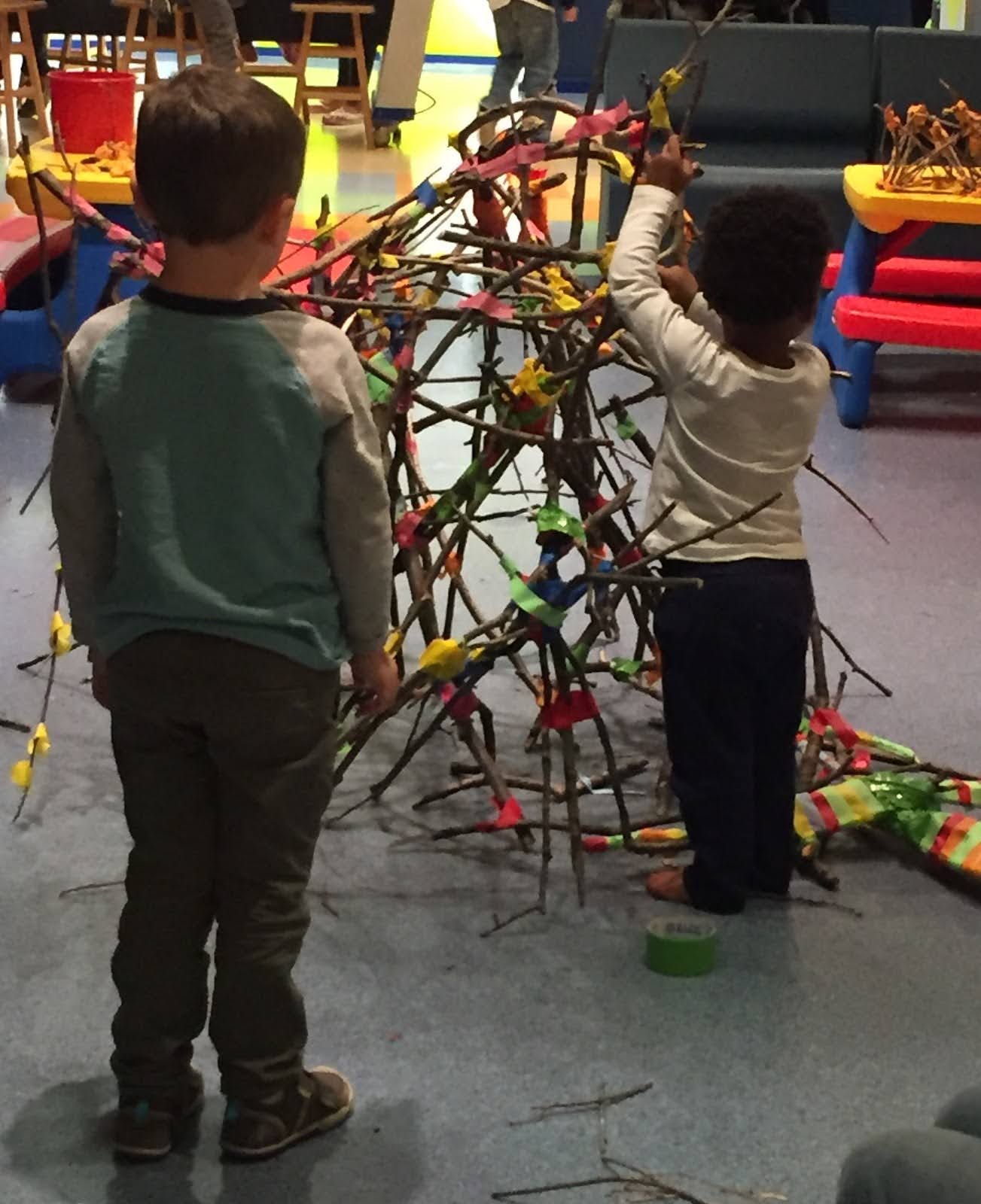
If you found yourself observing and wondering about what’s going on in these young children’s minds —you’re not alone!
Since 2008, Boston Children’s Museum has teamed up with researchers from MIT’s Early Childhood Cognition Lab (led by Dr. Laura Schulz) to explore what young children understand and how their thinking and learning develops.
So… what happens when researchers from MIT visit the Museum and how do they learn about learning?
With the permission of both a child and their guardian, researchers invite young children to try activities that are designed to investigate specific questions about how young children learn. Young children have the opportunity to do what they do best—explore and play—while researchers observe what they’re doing and listen to what they’re saying.
By observing lots of different children doing the same activity (or variations of that activity), researchers learn something new about what young children understand and how learning happens at different stages of development. Throughout the process, researchers also learn something new about their own research. And often, they end up with even more questions than they started with!
What research is happening at the Museum now?
Currently, three researchers from MIT’s Early Childhood Cognition Lab are doing studies with Museum visitors.
- Shengyi Wu is interested in finding out if, and how, the amount of attention an adult is paying to a 4 to 7-year-old impacts the way that child might focus on a task.
- Sam Cheyette is using an interactive game on a tablet with 3 to 6-year-olds to explore the ways children understand abstract patterns, like in geometry.
- Brian Leahy is investigating how 4 to 5-year-olds make predictions when there are lots of possible outcomes by playing a simple computer game.
These studies happen in the PlayLabs next to Construction Zone on the Museum’s 3rd floor. You may wonder what the rooms look like inside… Here’s a photo of Shengyi Wu inside one of the PlayLab rooms!

Each of these studies is a work-in-progress, but similar sorts of research has been happening for decades, both at the Museum and beyond. All together, findings from this type of research help not only researchers, but everyone who cares about children (like educators, health care providers, policy makers, and parents and caregivers) understand more about how we can best support children’s learning and development.
Interested in learning more? If you’re at the Museum, talk to the researchers—they’re not always at the Museum, but when they are, they are very happy to share what they’re learning. Or visit MIT’s Early Childhood Cognition Lab’s website: https://eccl.mit.edu/

 The Power of Play