
Written By: Emily Pratt, Museum Program Fellow
Next up in the Habits of Mind blog series is Thinking Creatively and Imaginatively. Habits of Mind are ways of thinking and being that help children (and adults!) stay curious, creative, and confident. Envisioning possibilities, solutions, and forms of expression; having ideas; thinking outside the box; problem finding and solving are all aspects of Creative and Imaginative Thinking. Let’s dive in.
Waves roiling in the wind crash salty spray over board and send the small sailboat I stand upon rocking. The crests of the waves are frosted by a murky sea foam from the sea’s churnings and grumblings and storm clouds seem almost to be descending upon me. I try to spot the shore and my path back to land but instead spot the faint billow of an unknown sail.
“Emily we’re leaving soon!” my mom’s voice pulls my five year old self out of my daydream. The roiling waves slowly morph back into the sloping forms of rolling hills, the billowing sail stretches into the awning of an ice cream shop, my sailboat a slightly rickety fence that creaks in protest as I shift to get down.
Creativity and imagination were key components of my childhood and greatly shaped my experiences. Leaves in a puddle were actually colorful fish waiting to be caught with a stick (that really was a fishing rod). Dandelion stems curling in water made the best pasta. If we view things as more than just their simplest form we open up so much potential. An item may be intended for one purpose but if we tilt and turn the item just so, a new idea might come to mind. A block may be intended for building and stacking but when placed down flat on the floor it can be the perfect sled for a doll. Standing up, it can act as a door or even be used to prop things up or stop a table from wobbling. Learning to view things from multiple angles and being creative are valuable skills, especially for problem solving.
Creative and imaginative thinking are Habits of Mind, learning goals we look to encourage and foster at the Boston Children’s Museum. April Vacation’s Spring into Play Week programming (focused on open ended play) exemplifies these processes. This year, the first part of the week focused on playing with cardboard boxes. Staff welcomed visitors with a standard greeting along the lines of, “Hi, we’re playing with cardboard today, would you like to create something?” This open ended invitation doesn’t restrict or limit creative avenues for the kids, but rather opens up endless possibilities. There is no implied correct approach or one right way to engage, allowing the children to employ agency and choice in their play. Streamers, bubble wrap, disposable table cloths, and tape were all provided to expand the designs. The second half of the week involved building with superspace tiles or large magnet tiles shaped like triangles, trapezoids, squares, and rectangles which you can build with. Throughout the entire week, stuffed animals, puppets, and costumes were present promoting pretend play opportunities. When entering the Common at Boston Children’s Museum during the week, you might see a little construction worker creating an enclosure for a seal, or spot a penguin in a sparkly tutu and a cape. Cars, cities, and zoos all filled the space.

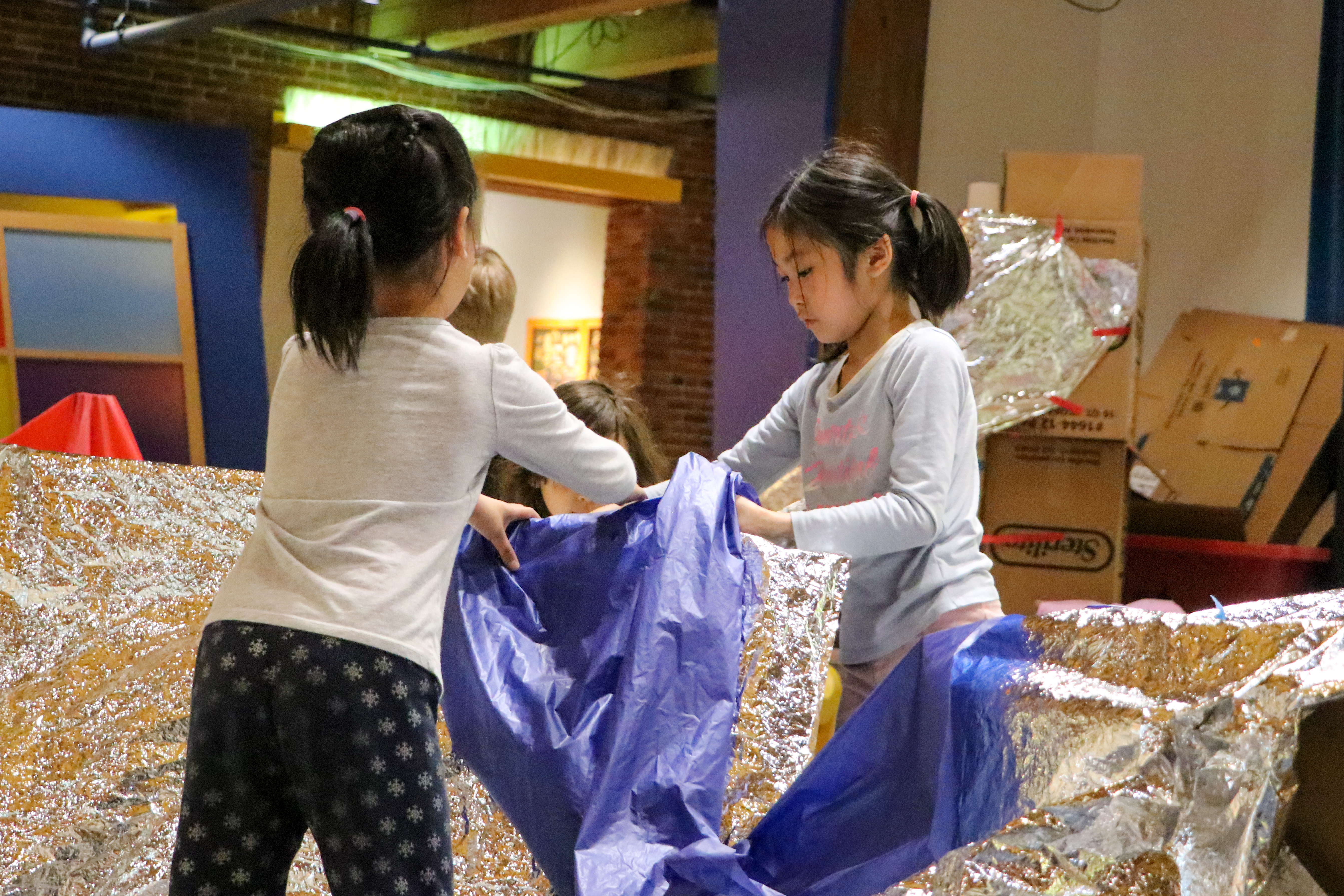

I was fortunate to have the chance to staff the space a number of times and had a number of interactions with kids who amazed me with their creativity, and even encouraged and prompted me to activate my imagination too. When building an example cardboard structure, a child came up to me and started to help me build. The child accidentally stepped on a puppet and immediately said, “Oh no, the lion’s foot is hurt!” This, of course, led to the immediate formation of a hospital in which I supplied various treatments to the constant stream of patients who were being admitted by this child. Fake play grass was perfect to soothe a penguin’s stomach and magic was necessary to heal the hurt wings of a pterodactyl. By engaging with this imaginative and creative thinking of both what ailed each stuffed animal and also how we could help, the child was able to consider the feelings of the stuffed animals, their needs, and how to care for them. The imaginative thinking led to pretend play that may have promoted some social emotional learning too.
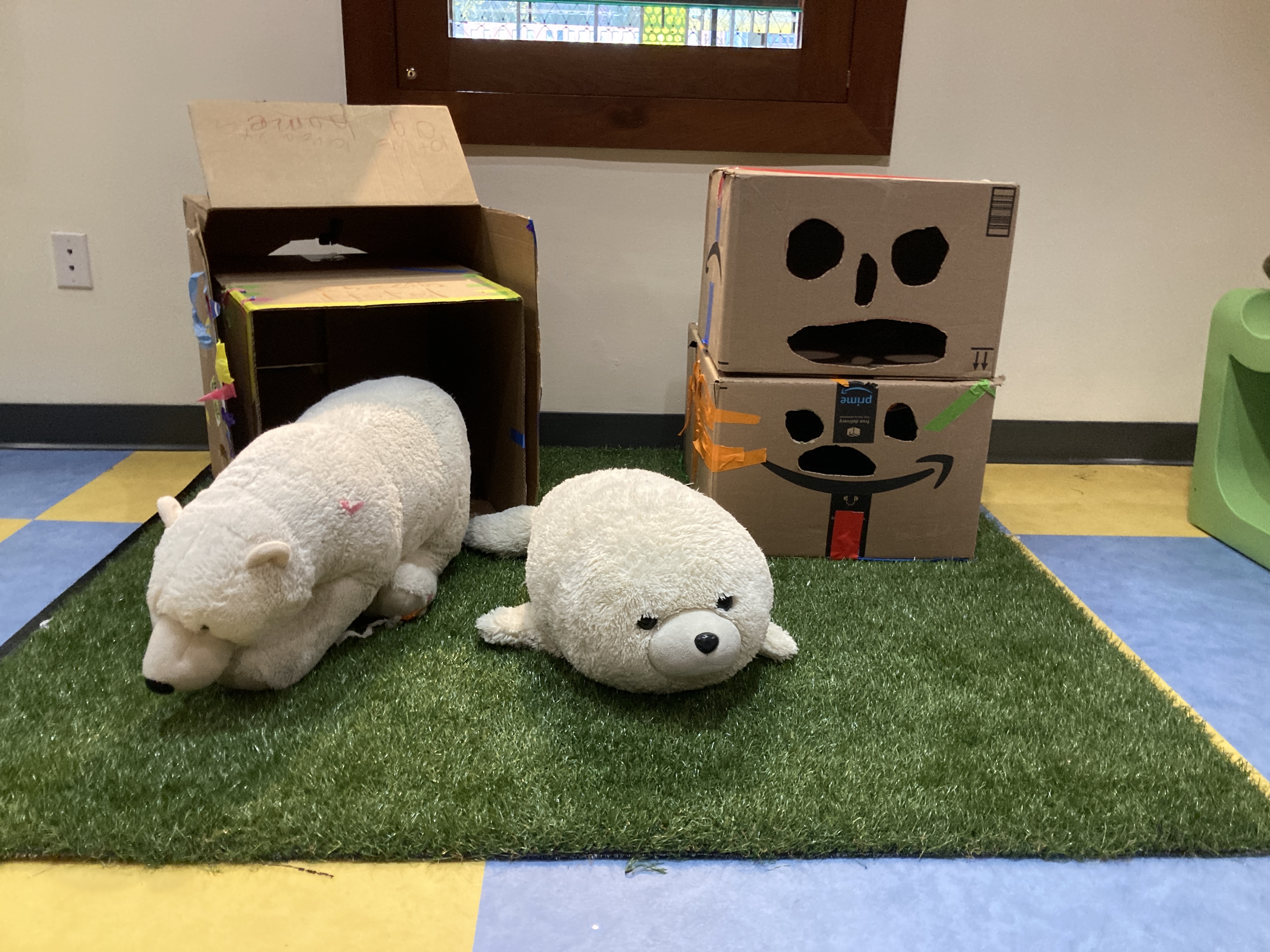
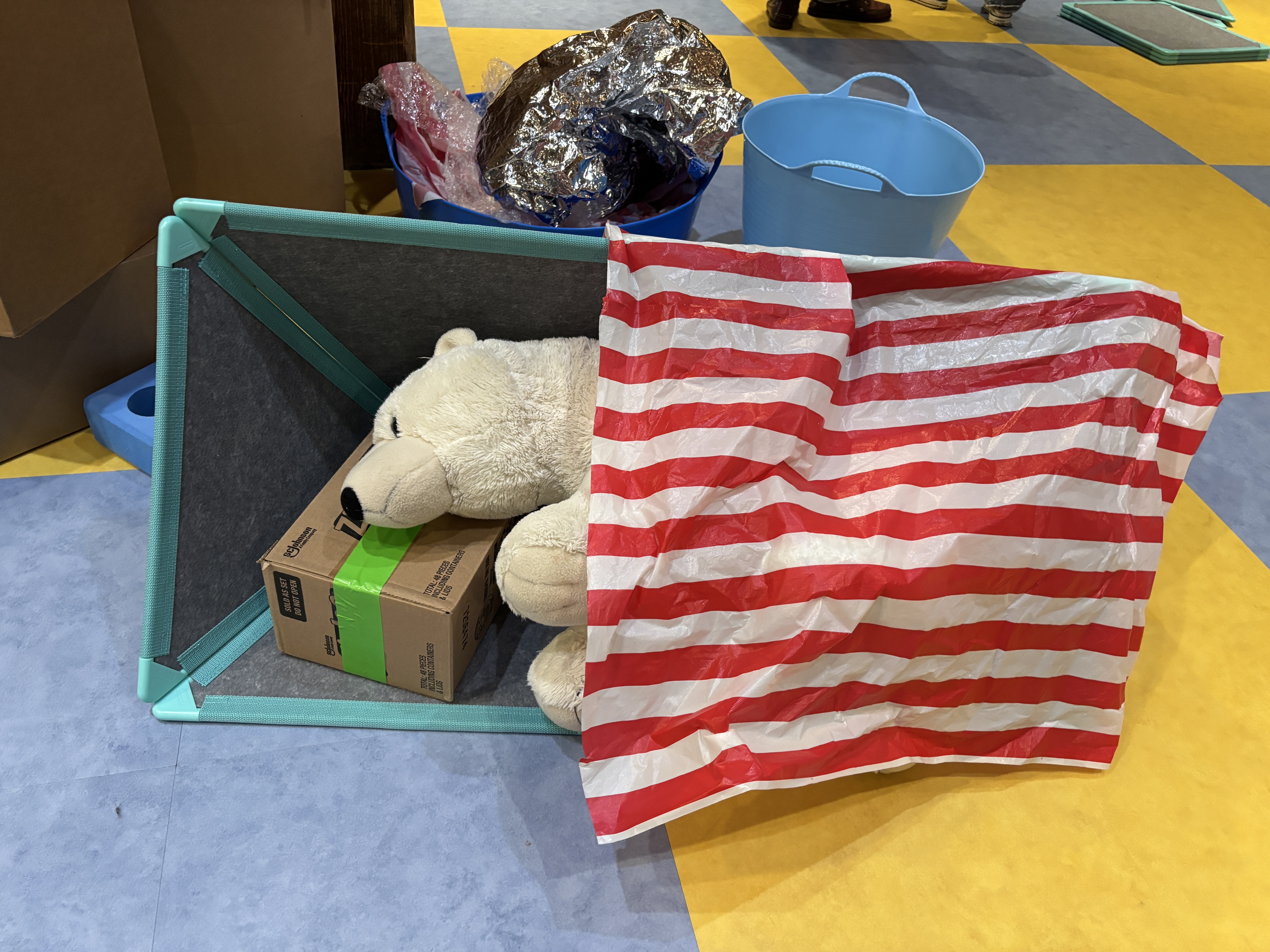
This idea of open ended play and encouraging creative problem solving is not just seen during Spring into Play Week. The Museum’s exhibit spaces are also designed to provide children with agency in their play and to encourage them to envision and imagine new possibilities. The Countdown to Kindergarten exhibit allows kids to not only sit on a bus like they might when going to school, but to also drive the bus! In Arthur and Friends, children can travel the world in an airplane without ever leaving the ground. Imagination and creative thinking skills go hand in hand. Having a good imagination allows one to keep an open mind to problem solving and possibilities and in turn may spark solutions that others have never considered.
I cherish the moments of creativity that I witness and sometimes get to share in, in my work at Boston Children’s Museum. For a moment, I get to once more experience the childhood wonder that comes with creating and imagining. While sadly I can’t step into these worlds as easily and fully as I did as a child, with one foot firmly rooted in reality, I am offered glimpses and a reminder that imagination is important for adults too. Not only are these truly valuable skills that can encourage social emotional learning and broaden the scope of a child’s world but they also help to provide so much joy and whimsy. In the moments I witness, and in the child created/imagined realms that I am briefly able to join, everything else washes away for a moment, and I am returned once more to my younger self.

 The Power of Play
That looks like it was so much fun! But not only that but a valuable experience to have with being able to stay curious and creative!
https://www.atypicaljourneystore.ca