
Written By: Sydney Slack, Museum Program Fellow
Next up in the Habits of Mind blog series is Working Flexibly. At Boston Children’s Museum, we define Working Flexibly as incorporating and revising ideas based on new information, employing objectivity and acknowledging subjectivity. Learn how Working Flexibly comes into play throughout the Museum in Program Fellow Sydney’s latest blog.
“But I want to go see Arthur next,” states a young child indignantly, as he and his grown-up walk out of Fantastic Forts towards the Creative Labs.
“It’s your sister’s turn to choose now and she wants to try the art project,” his grown-up replies, “You just chose to build a fort. Would you like to choose Arthur when it’s your turn again?”
The child thinks for a second, then nods and walks toward Art Lab with his sister and grown-up. He still doesn’t look happy, but he’s going along with the plan even though it’s not what he wanted to do.
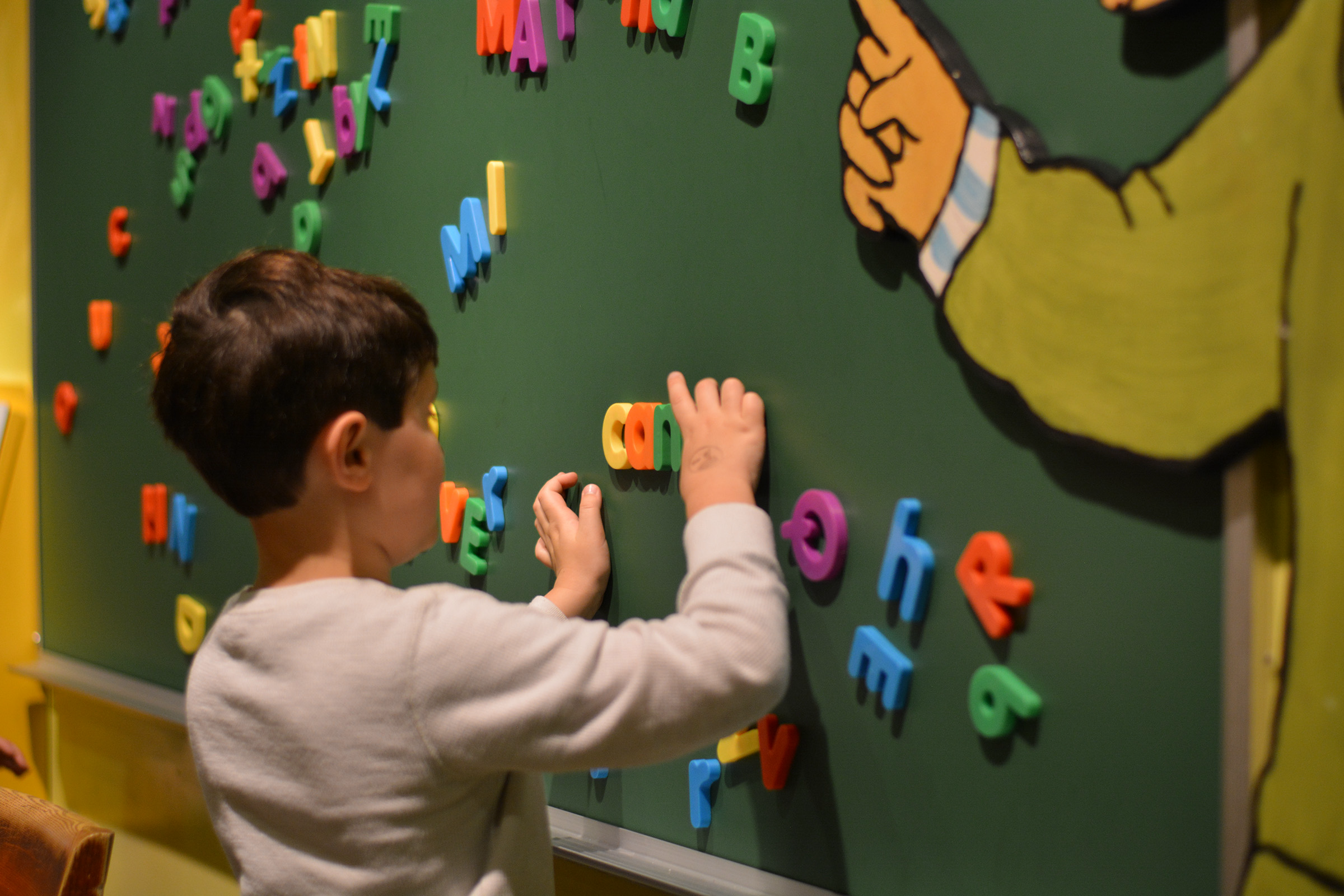
The above anecdote is part of a conversation I overheard between a child and adult as I was walking through the Museum. In it, the child is recognizing and understanding the new plan (in which he and his sister take turns choosing parts of the Museum to visit). He then adapts to the new circumstances and accepts that he will get another turn — he just has to be patient.
This interaction between child and grown up is a great example of working flexibly, one of the Museum’s Habits of Mind. Habits of Mind are ways of thinking and being we try to foster in young children here at Boston Children’s Museum. Working flexibly, here, means revising ideas based on new information, adapting to unexpected situations, and understanding the difference between fact and personal perspective.
As adults, we are constantly gaining new information, which impacts how we go about our day to day life even if we don’t always recognize it. For example, seeing a sale at the grocery store might change which brand we choose to buy. Or perhaps, hearing that your friend was having a rough day influences your tone when talking to them. Practicing such skills at a young age, when the stakes are low, sets our children up for success in school, in work, and in life. At the Museum, we see children practicing these skills all the time in our exhibits and drop-in programs, such as with the interaction described above. However, as a Program Fellow, I most often seen working flexibly in action during our school programs, like Earthquake Engineering and Suminagashi Art.
One key part of working flexibly is revising ideas and incorporating new information, and nowhere is that more apparent than in our Earthquake Engineering school program. During this program, each team of students is given a budget of pretend money that they can use to buy materials to build a structure that can withstand a simulated “earthquake.” The students practice presenting their thoughts and hearing ideas from others as they work together to build their design. Everyone in the group usually has a different approach to how they want to build their structure. It can be challenging for young children to take the time to hear each individual idea when there’s so much fun and excitement to be had, so Museum staff, teachers, and chaperones are there to encourage children to listen to each other closely and work to find a solution together. After building their design, the students have the opportunity to test it out on the shake table. Usually, things don’t go perfectly on the first try, and this is where working flexibly comes into play. Groups work together to understand where their design fell apart and to evaluate how their design could be improved and rebuilt. By the end of the session, the groups have built, rebuilt, and tested their structures multiple times. By working together and learning from past trials, most groups are able to create a structure that stands without falling! They often impress me with the creative ways they combine the materials, like using rubber bands and straws to create a cage-like design around the main tower. This program is a personal favorite of mine because it gives young people the chance to practice both their teamwork skills and their problem solving skills in the same situation. They experience what it is to think like an engineer (i.e. work flexibly), which sets them up to continue learning and growing as they become adults.


Working flexibly doesn’t just happen in group dynamics. It also plays a part in our individual projects and our individual perspectives. The Suminagashi art program, which we offer as an addition to the Japanese House school program, provides a good example to explore this side of working flexibly. I have had the pleasure of helping with the Suminagashi art program numerous times, setting up stations and observing how Akemi, who manages the Museum’s Japan Program, explains the history and process of this beautiful art. Suminagashi, the art of Japanese paper marbling, uses ink and oil on water to create intricate patterns and unique designs, aided by wind from a hand fan. While each visitor goes through the same basic steps to create their artwork, they can make subtle changes and the end results are wholly unique every time! How each visitor feels about the art they and their classmates create is up to personal perspective. In this school program, students are often so excited about the chance to participate, they are proud of however their piece turns out. That doesn’t mean they have no preferences. Throughout the process, students pay close attention and observe what their classmates do. A student may not like how wiggly the lines were on the paper of the child who went before them and she noticed how that child was waving the fan rapidly. When it is her turn, the student may choose not to use the fan at all. Another student may have liked how dark the ink was on the paper of a student at a neighboring table and so he may choose to use lots of ink, mimicking what he saw the other child doing. Here, the students are not only incorporating new ideas, but incorporating them based on personal preference. This kind of working flexibly will help them make informed decisions and express their opinions in a respectful manner as they grow.

Working flexibly is important not only for supporting practical skills such as teamwork and problem solving, but also for helping us to be open to new information and adventures. As young people learn to incorporate and utilize new information into their daily lives, they learn how to adapt in an ever-changing world. These are the traits we certainly want to instill in our children, and hopefully in the process of guiding them, we, as adults, open ourselves to working and thinking flexibly as well.

 The Power of Play