
Written By: Sydney Slack, Museum Program Fellow
Next in the Habits of Mind blog series: Understanding Different Perspectives. At Boston Children’s Museum, we define Understanding Different Perspectives as considering issues from the viewpoints of others, assuming different physical and mental perspectives, and being able to empathize with others. Learn how Understanding Different Perspectives comes into play throughout the Museum in Program Fellow Sydney’s latest blog.
How do young children develop empathy? Are they even capable of understanding perspectives that differ from their own, especially when they are still experiencing so much of the world for the first time? These are the questions that I asked myself when tasked with running a program all about empathy for the first time as a Programs Fellow, learning about the Museum’s programs, child development, and family engagement as an emerging professional.
The Museum educators have offered a varied array of programs, exhibits, and experiences over the years related to social emotional development, but we are now putting more focus on empathy development. At the Museum, we define empathy as the ability to imagine, understand, and care about the emotions of others. After doing some research to better understand empathy and development myself, I learned that children are more than capable of understanding other perspectives in their own ways. As with many other skills, it takes time and practice for children to understand empathy and differing perspectives in the way adults do (and even then we all express empathy slightly differently). This is why Understanding Different Perspectives is one of our Habits of Mind, or a skill/way of thinking we encourage throughout our programs and exhibits. In order to have empathy for another person, we must first be able to understand our own feelings. Then, we endeavor to understand that people have thoughts, feelings, and experiences different from our own. As children start to explore relationships with friends, teachers, neighbors, and others, this skill becomes essential. It can start as easily as noticing how another child is expressing an emotion (such as crying when sad) or recognizing different feelings they themselves experience (drawing a picture to show how they’d feel in a specific situation). These are the first steps in acknowledging that other people sometimes feel differently than we do. Not only is that okay, but the variety of emotions, opinions, and perspectives in our communities make them awesome places to live and grow!
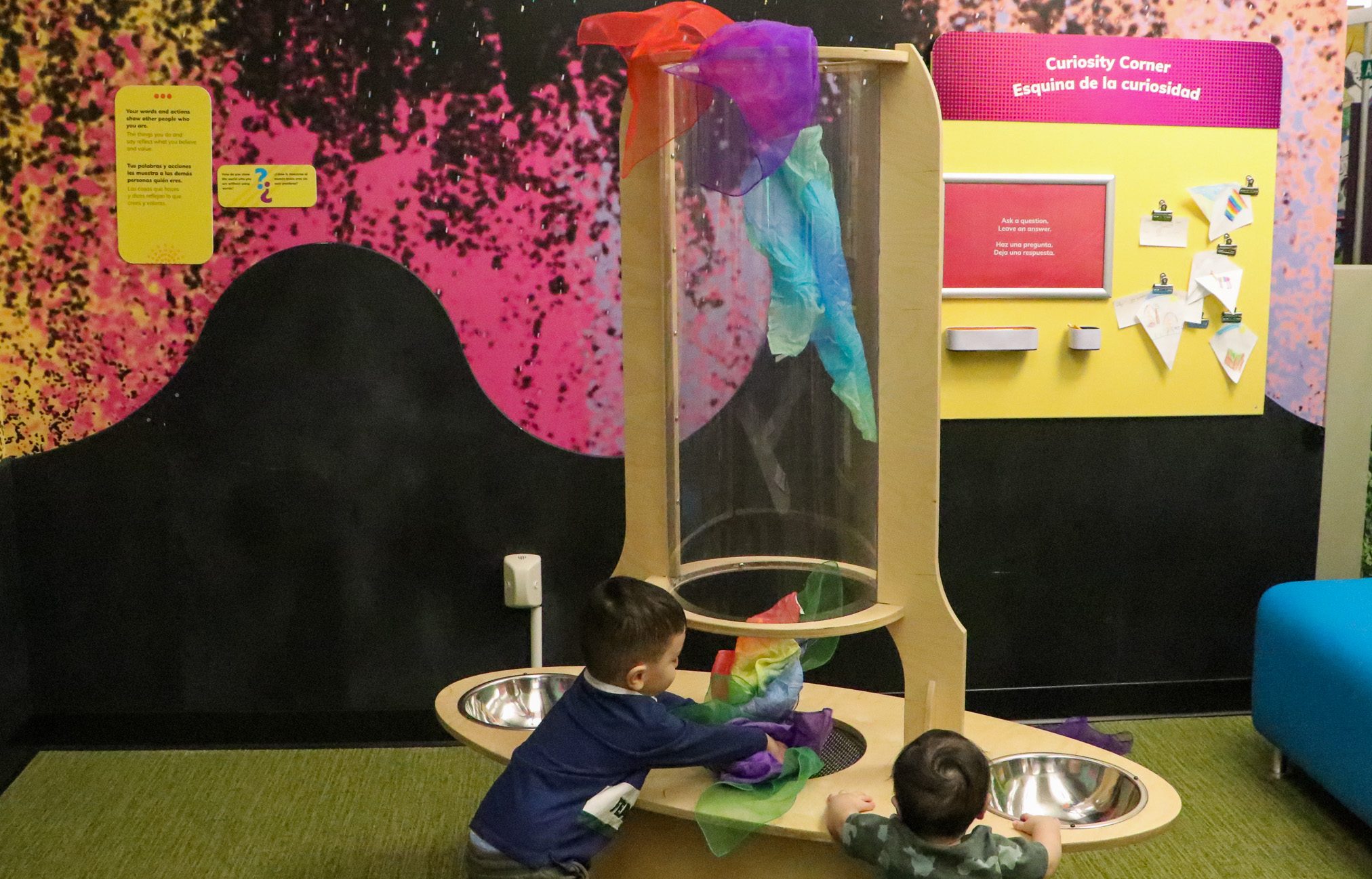
Understanding different perspectives goes hand-in-hand with our understanding of empathy. Both can be a challenge, for visitors of all ages. That’s why we like to incorporate them into some of the programs and exhibits we have here at Boston Children’s Museum. The You, Me, We exhibit is one of the first examples that comes to mind. This exhibit, like many throughout the Museum, contains a wide variety of books about people, daily life, and celebrations from around the globe. Such books urge us to learn about perspectives outside our own, so we might better understand the words and actions of others. Additionally, the kitchen portion of You, Me, We features stories that are not in books. Looking at the play kitchen, you will likely notice the images of dumplings on the wall. Dumplings are featured because there is a version of this dish in many cuisines across the world. Highlighting this quality helps us to make a connection with people and cultures different from our own, providing a way to see things from their perspective through a shared experience. Right next to this is a video of people sharing their favorite memories about food, many of which revolve around family gatherings or a recipe that has been passed from generation to generation. In essence, something that almost anyone can relate to and empathize with. As one of the interviewees puts it, food is important because “we all need it.” It is something that every person shares, even if what we eat looks different. Being able to recognize that commonality and appreciate the things that make us unique is a key part of learning to step into another person’s shoes and see things from their point of view.

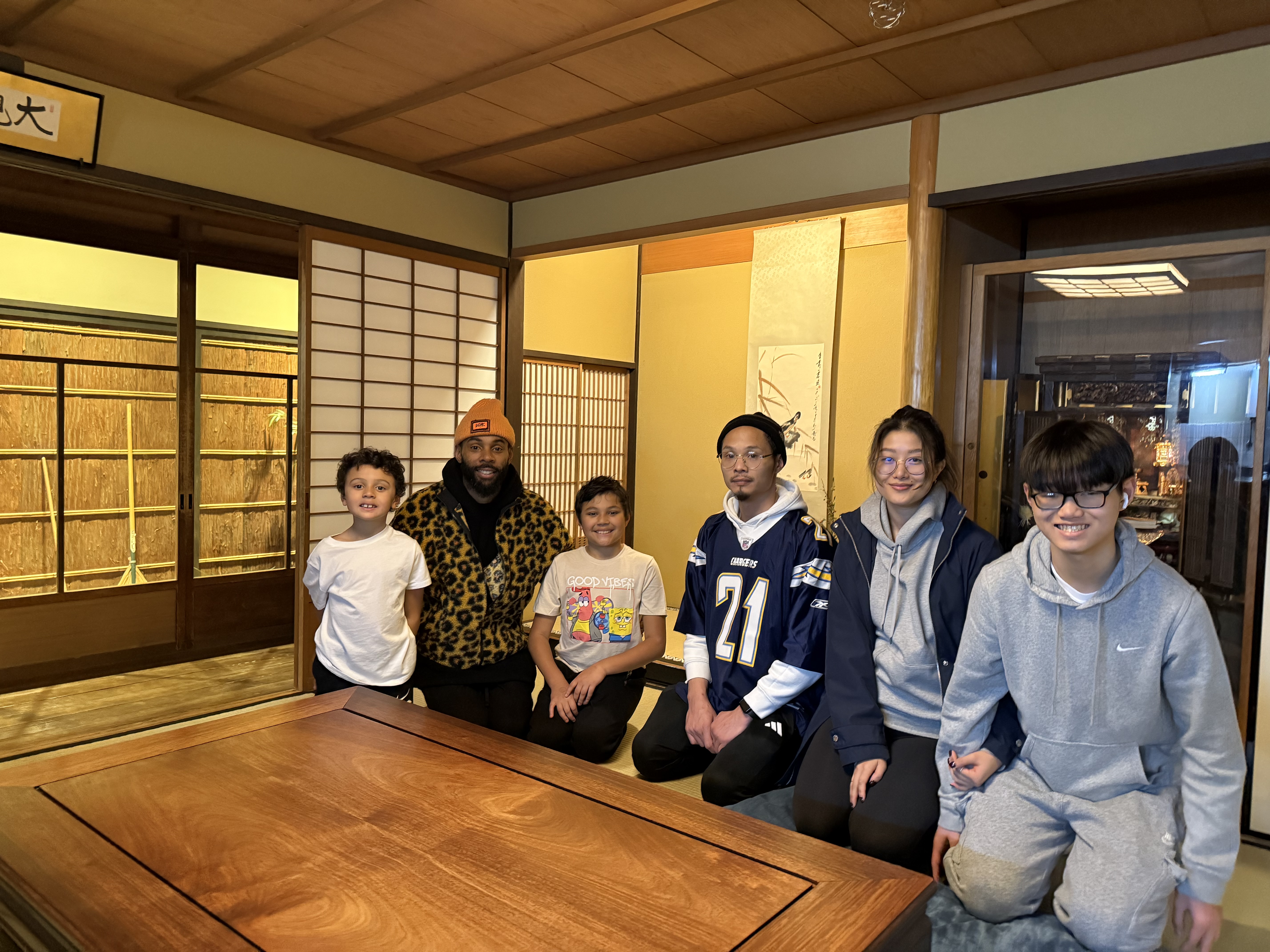
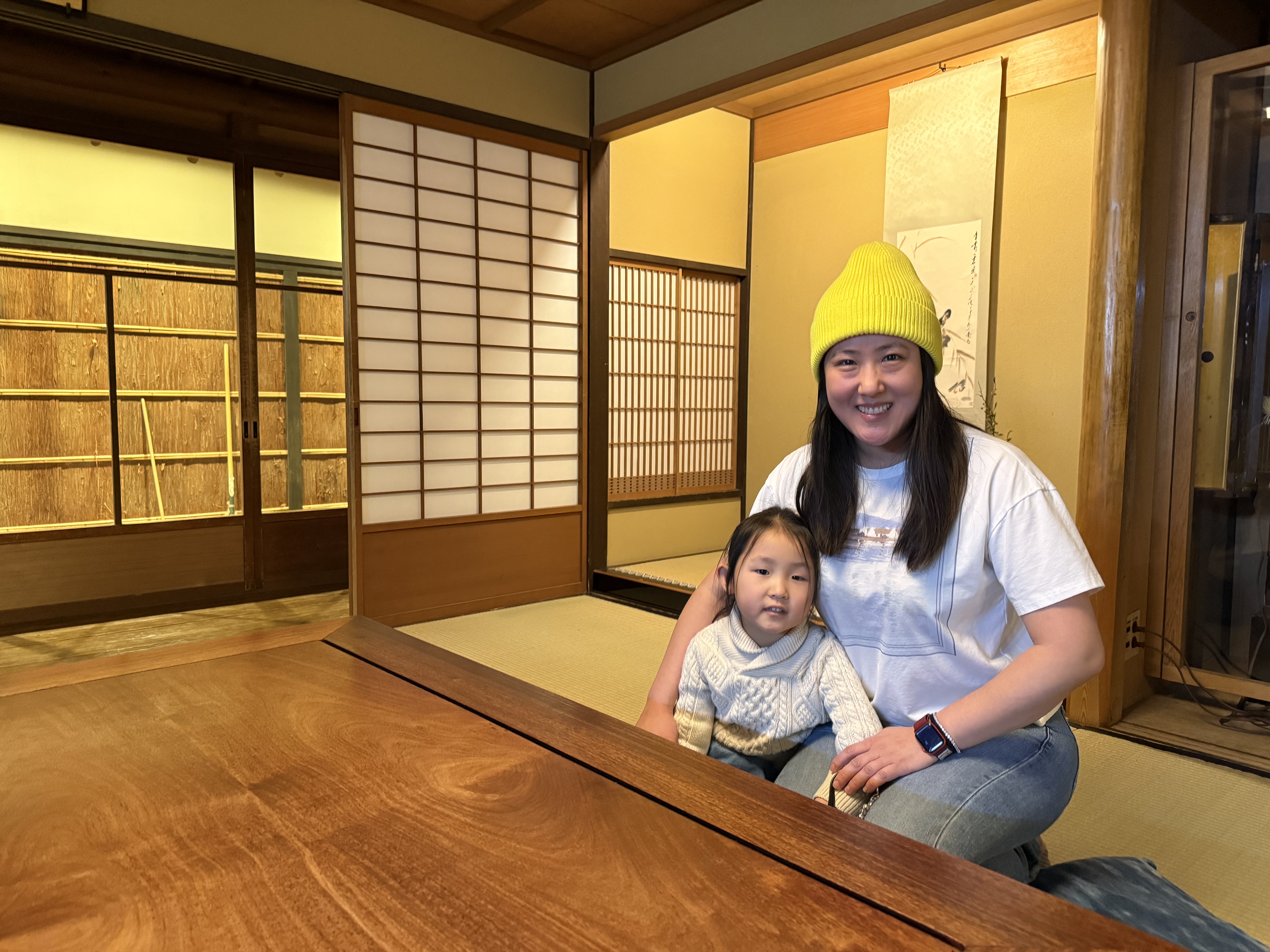
Understanding different perspectives is a skill I also see practiced in our various school programs in the Japanese House and Art Lab. After an initial tour of the Japanese house, the largest part of the students’ visit to this space involves an activity in which they get to explore items chosen by students in Japan just like them. Three different Japanese children chose objects important to their routines at various parts of the day (morning, after school, and evening). The students get to explore these items while thinking about the ways in which their own routines are similar or different to the children who chose the objects. Amongst declarations of “I like strawberry toothpaste too!” or “My family also eats hotpot” the students learn that they have so much more in common with the children from Japan than they might have thought. Students are working in small groups during these discussions and get to hear the opinions and perspectives of their classmates. They may learn something about another student’s preferences or background that they hadn’t considered before. Being in the Japanese House, looking at these objects, and relating them back to their own lives allows these children to mentally transport themselves halfway across the globe. They gain an understanding and connection with people they have never even met and people they see everyday, deepening their empathy in the process.
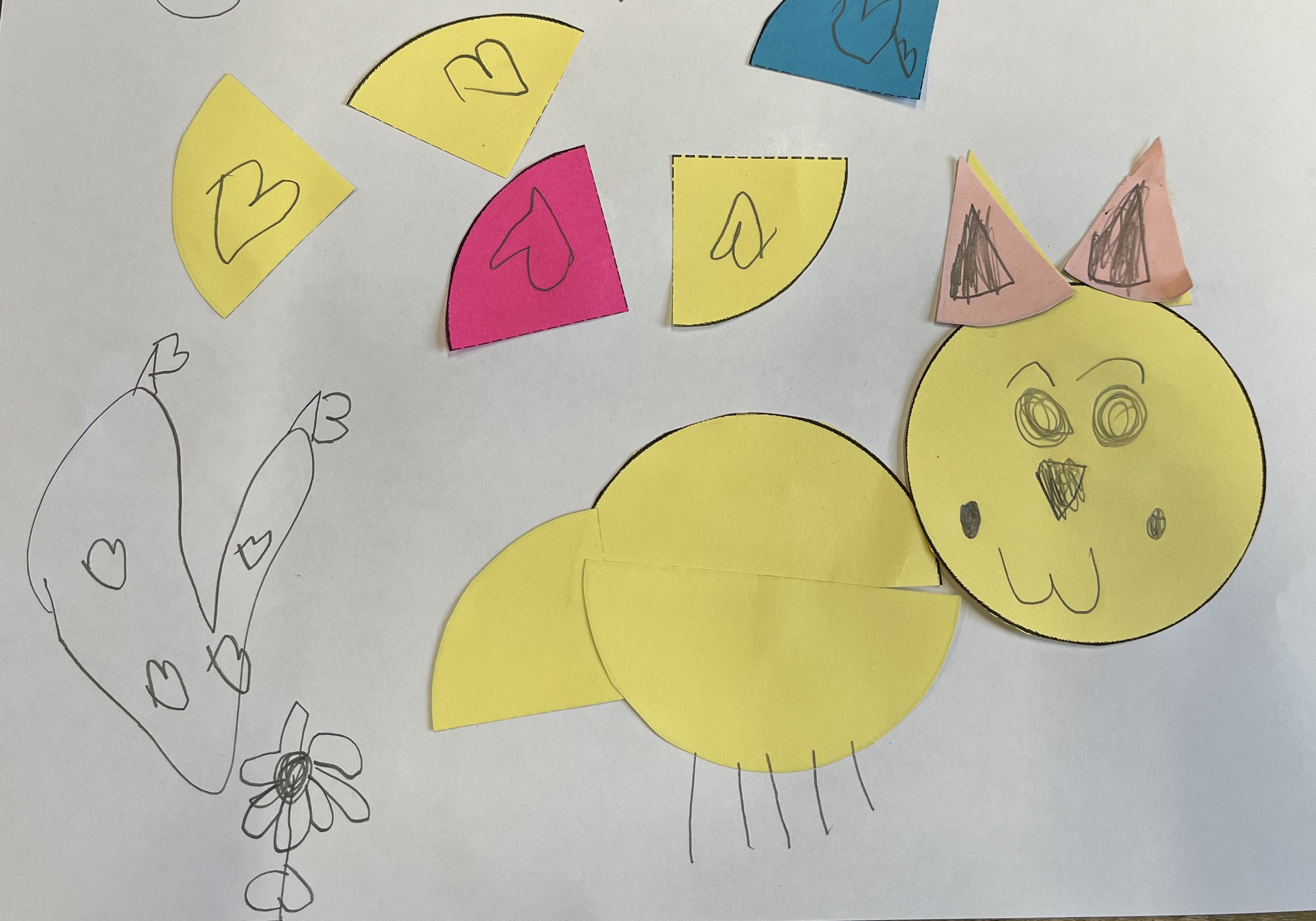
Sometime opportunities to practice empathy are less obvious, happening without a prompt being necessary. Even playing alongside others or doing a project together present an unexpected moment for perspective taking. In the Art Lab, we offer a school program called What Can a Circle Be, in which students use their understanding of whole, half, and quarter circles to create their own artwork. I’ve gotten to assist with this adorable program a few times and am always amazed by the variety of snowmen, animals, spaceships, etc. that children are able to imagine using merely parts of a circle! While the students get to exercise their creativity, what I appreciate most about this program is that it allows them to how their classmates think. Each person makes their own artwork, but they often start by mimicking one person’s idea. While someone might see this as mere copying, I think it could also be interpreted as an unintentional attempt at trying to understand another person’s perspective. They are physically going through the motions of putting together an image the same way another person did. What better way is there to try to understand how another person thinks about a task? They get to explore the other person’s idea before adjusting or changing it to make it their own. At the end of the session, anyone who would like can share their design is given the opportunity. Once again, students get to see how and what their classmates made and better understand how they approached the activity. They show each other support and kindness by complimenting each other’s ideas or applauding their share out.
One of the most important skills in life, empathy, starts with being able to understand different perspectives. This is why is it one of our Habits of Mind and something we try to infuse into programs and exhibits throughout the Museum. As we’ve seen in You, Me, We, the Japanese House program, and What Can a Circle Be, understanding different perspectives means being able to put yourself in someone else’s shoes, connecting over common ground, and celebrating the things that make us unique. Without these, the world gets much less interesting.

 The Power of Play