
Written By Mona Baloch, Religious Literacy Learning & Engagement Program Coordinator
There’s something new on display at Boston Children’s Museum!
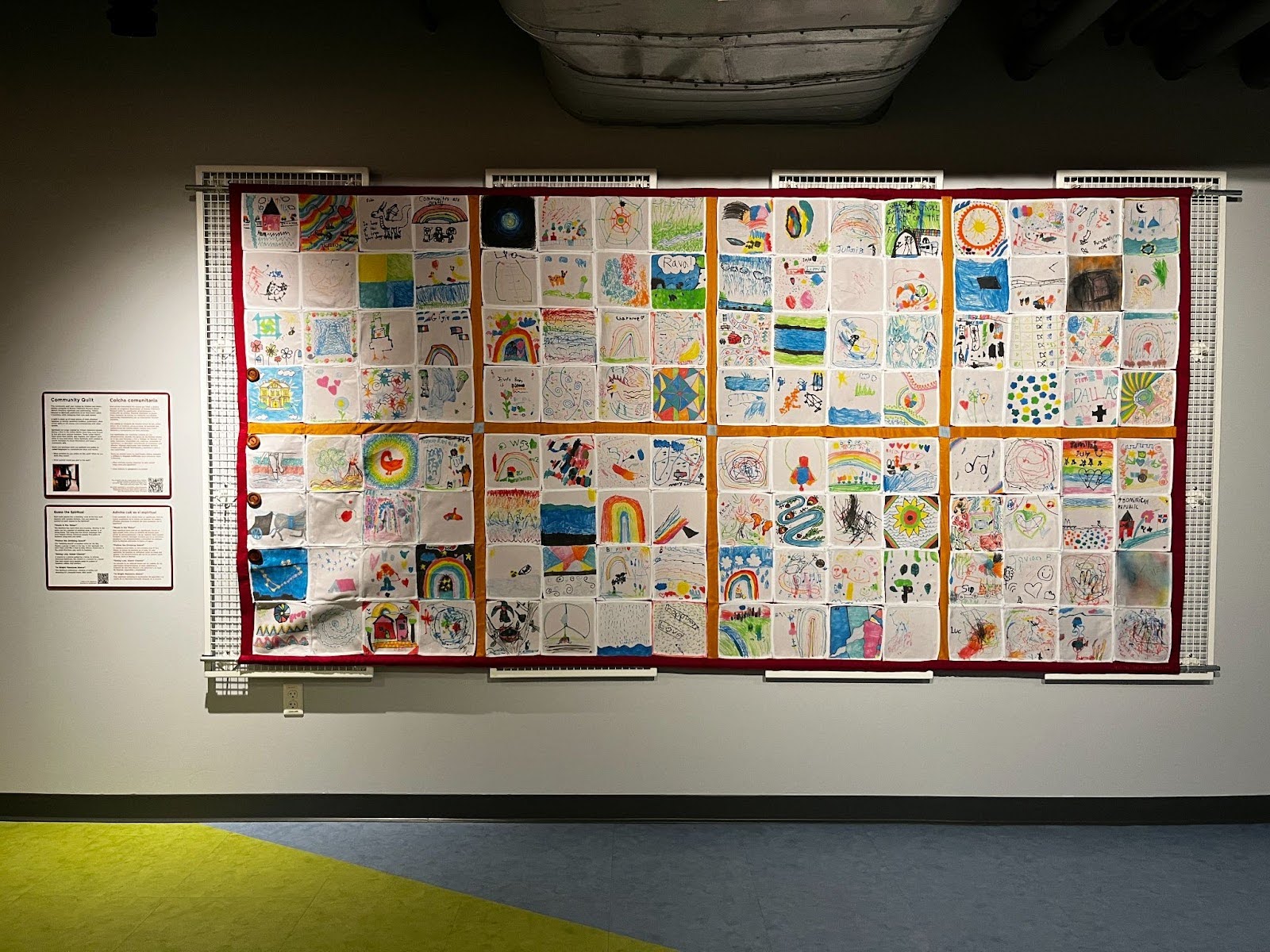
If you’ve visited the Museum recently, you may have noticed BCM’s new Community Quilt hanging on the third floor wall between Dinos in Space and the Japanese House exhibit. What is the story behind this quilt?
The story starts in 2024, when BCM’s Arts & Social Impact team began conversations with Castle of Our Skins, a local organization whose mission is to celebrate Black artistry and heritage through music, about a program called Portraits of Spirituals. This program highlights African American Spirituals and African American quiltmaking traditions through music, visuals, conversation, and hands-on creation.
We were particularly excited about the connections we saw to our Religious Literacy initiative. At BCM, we believe that it is essential for children and families, regardless of religious or nonreligious affiliation, to have opportunities to learn and share about religion, spirituality, and beliefs. Recognizing our own beliefs and other peoples’ beliefs can promote empathy, support identity development, affirm children’s natural curiosity, help us recognize similarities, and increase comfort with differences. Part of my role on this initiative is to think about engaging ways to address the topic of beliefs in our programming.
In December 2024 – my first few weeks at the Museum – I jumped right into our two pilot sessions of Portraits of Spirituals. I was struck by how the program connected with both children and grownups. In addition to educating about the intersection of religion, culture, and music, the program provided a creative space for community building and self-expression. We decided to bring the program back for a seven-part summer series in 2025..
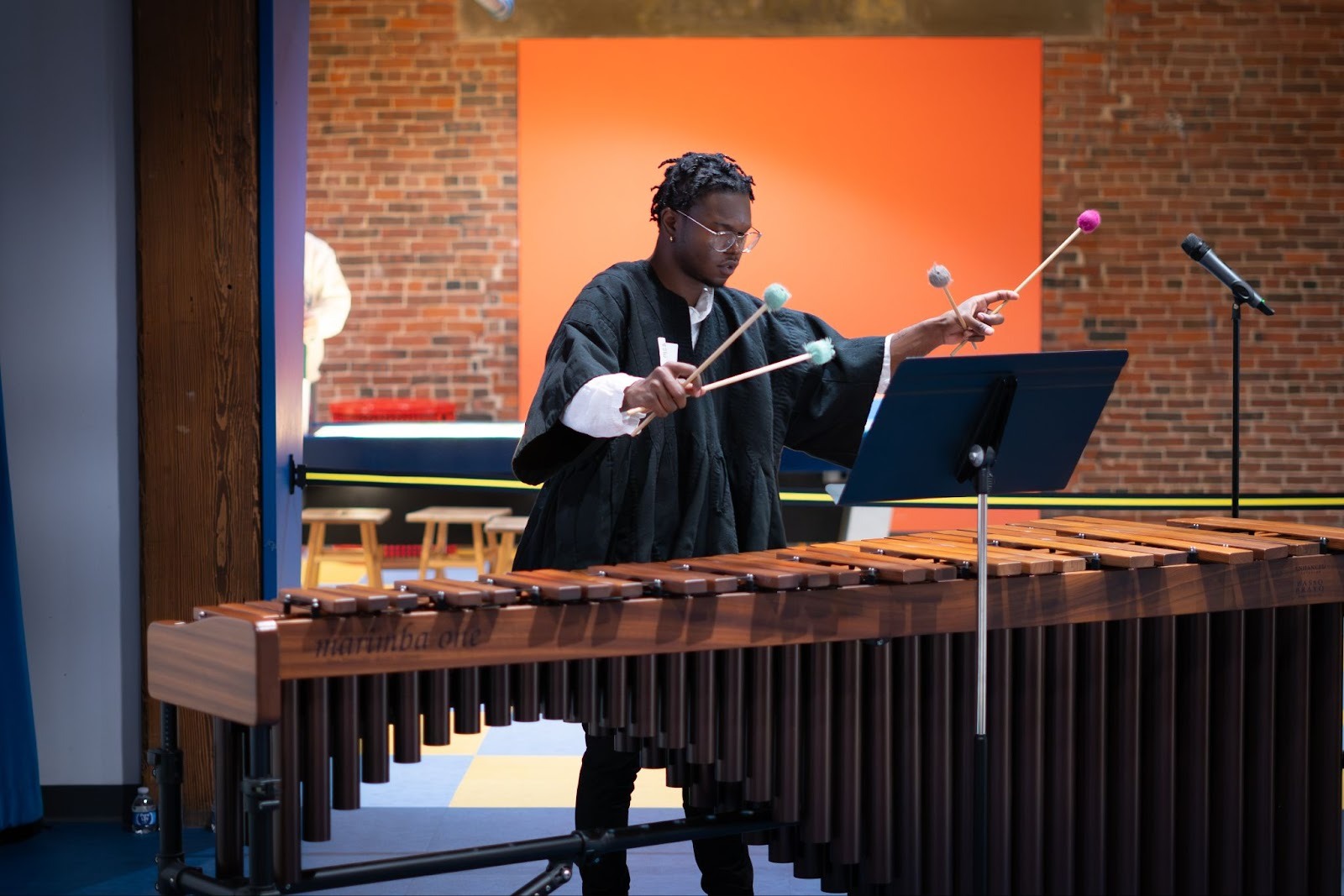
During the summer sessions, we welcomed visitors into the intimate setting of BCM’s KidStage theater, where Steph Davis, Castle of Our Skins teaching artist and marimba player, filled the room with the sounds of traditional Negro Spirituals, a genre of music steeped in African American history and spirituality. Visitors learned about the historical significance of Spirituals and their evolution into other forms of expression, like quilting. As they listened, children created quilt squares that represented the themes shared by Steph including migration, movement, community, and freedom, and their own identities and experiences.
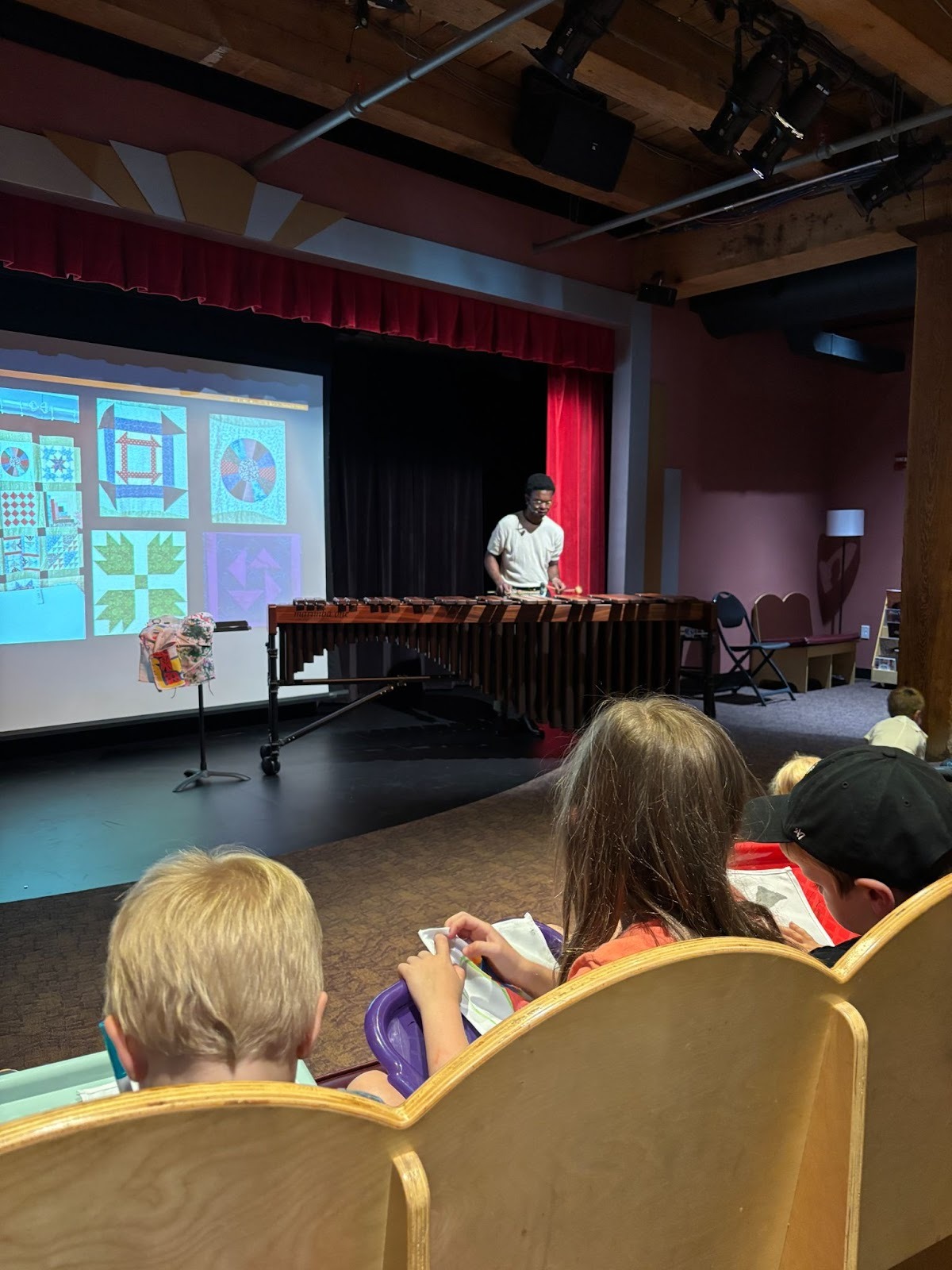
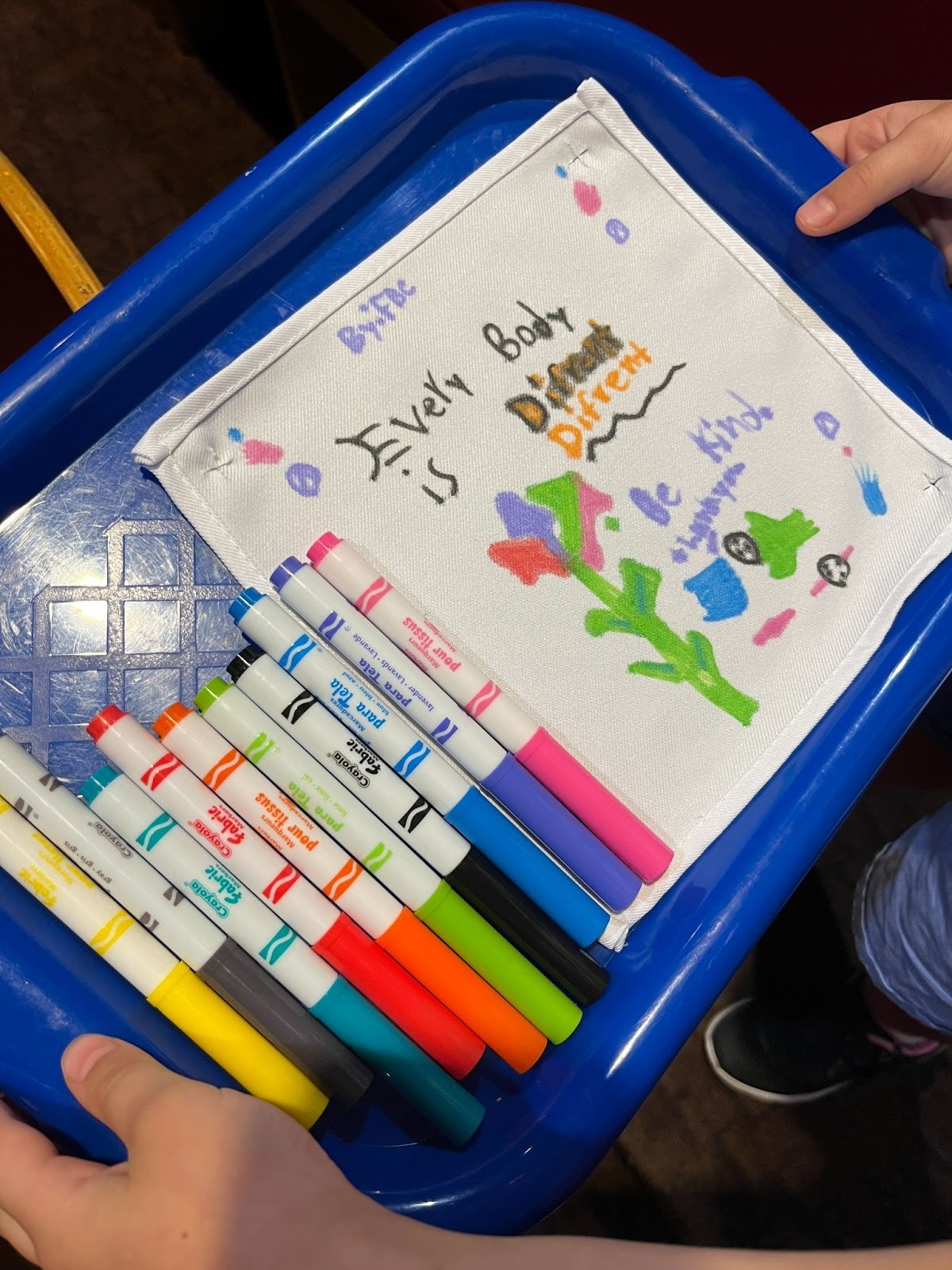
Steph says of the program, “It was important to me that young people learn about the music and culture of early Africans in America, particularly spirituals and their involvement in self-emancipation. … I hoped people walked away with a sonic, tactile, and educational impression of early African American culture and multiple strategies early African Americans used to liberate themselves.” In each session, we noticed kids and their caregivers express their deep thinking and reflections through their conversations, their engagement with the music, and the content on their quilt squares.
As visitors created their squares, Steph explained to them that these pieces, if left behind, would become parts of a whole that could be shared with future Museum visitors – a community quilt.
We were pleasantly surprised by just how many visitors agreed to leave their squares behind – it can be hard to part with something you created, especially when it feels so personal. After we had collected over 120 squares, we worked with Costume Works, a local tailor, to sew them into the final quilt.
The final quilt, Steph notes, “is both a tribute to early African American culture and a mirror for the youth of our city, reflecting parts of their identity back to them.” As you look at the quilt, you’ll notice common motifs like rainbows, water, flags, animals, and houses. You’ll also notice symbols that may be familiar or unfamiliar. “Each individual made dozens of choices that affected the final quilt: what colors to use, how much of the square to fill, placement, thickness of lines, and design,” Steph says.
For me, this collaboration with COOS has been particularly meaningful because of the deep roots it has built, not only through repeated programming at the Museum but also through the creation of something that can be shared for years to come. Creating the quilt has truly been a shared project between BCM staff, local organizations, and BCM visitors.
Now, our completed Community Quilt hangs on the third floor of the Museum through the spring. We hope you’ll come visit it, and try out an activity to match quilt squares to the Spirituals they represent.

 The Power of Play