
Written By: Sam Wong, Museum Program Fellow
In the final installment of our Habits of Mind Series, Museum Program Fellow, Sam Wong explores what “Persisting” looks like in and outside the Museum. Let’s dive in!
What goes up must come down. So why do we keep building even though we know that no structure will last forever?
At times, building can be frustrating as we battle forces of gravity and feelings of discouragement to achieve our vision. At Boston Children’s Museum, we define persisting as “Focusing, sticking to it, repeating, learning from mistakes.” Persistence bridges the gap between setting goals and achieving them, allowing us to thrive. Many of our exhibits and programs encourage our visitors to practice persistence as they tune their fine motor skills, creative thinking, and attention to detail. The joy of creation and success motivates our visitors to continue filling our spaces with their dreams.
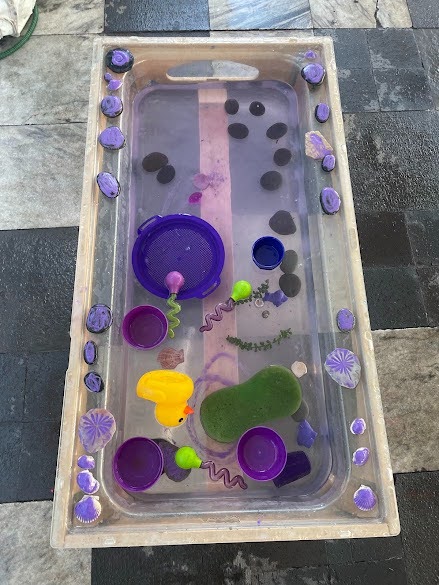
Repetition is a key component of persistence; as we try new skills over and over again, we may try different things and adjust our techniques. This summer, I observed a lot of joyful repetition at Curiosity Kitchen. There, children engaged with different tools and outdoor messy play. Children enjoyed using sponges, spoons and watering cans to move water between containers. I laughed with grown-ups as we watched children accidentally dump water on their own feet. As adults, it may be difficult to watch as our little ones struggle with tasks that we once had to learn and perfect as well. While it may be tempting to do the task for them, it is more helpful and fun to step back and see what they can do. I enjoyed seeing caregivers come back with their children throughout the summer and seeing their children grow while taking on new challenges.
Another key component of persistence is sticking to it. During our April Vacation Week program, Spring into Play, we built with materials like cardboard boxes, streamers, and colorful masking tape. Structures are brought to life with puppets, stuffed animals, and costumes. Cardboard has always held a dear place in my heart because what looks like trash can be turned into treasure. One day, a child approached me and said she wanted to create a rocket ship but didn’t know how. She wanted to give up because she didn’t know where to start and what materials to use. Together, we drew her idea and broke it down into smaller parts. A complicated problem became manageable when we identified familiar shapes: triangles for the nose and wings, a box for the body, and cones for the engines. Sticking to it and pushing past setbacks allowed her to break down the problem and express her dreams of space travel. I was impressed that she stuck with her creation and made sure to include both a man and a woman on this rocket to Mars, because “back then women weren’t allowed to go to space.”
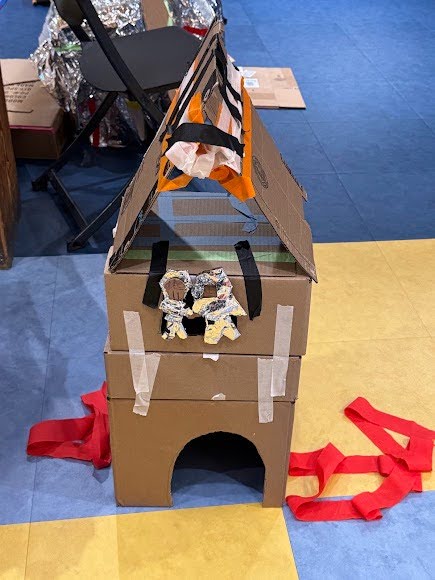
Another part of persistence is resilience, the art of bouncing back and letting go of what we believe should be perfect and pertinent. At Boston Children’s Museum, structures are left to the “natural” forces of other children. They may be compelled to add to an existing building or choose to destroy it: not out of malice, but usually to experience cause and effect. Besides, destruction can be quite fun!
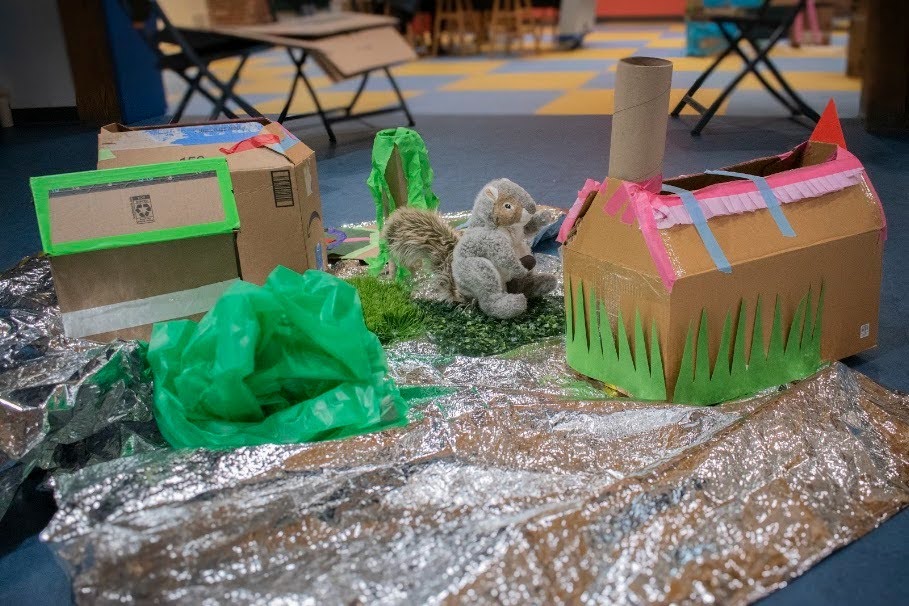
During the April Vacation Week program, another child came and told me that she wanted help building an animal shelter. The shelter started as a small modest enclosure but grew to include a duck pond, a sleeping area, and a closed-off area for “shy animals.” While stepping away for materials, somebody else came by to take parts for their project from what looked abandoned. After witnessing her disappointment, I was surprised at her quick recovery as I heard her say, “Oh no! There was a tornado… we must rebuild!” Over the course of our time together, this became a game about natural disasters, as we fled from floods, fires, and earthquakes. Turning disappointment to a game can be a way to develop emotional resilience in a safe setting. Persistence is the art of letting go of expectations and welcoming change. Persevering through setbacks builds grit and resilience, qualities that prepare for future uncertainties.
This leads me back to my original question:
Why do we keep building even though we know that no structure will last forever?
I believe that like so many adults, children enjoy creating, destroying, and repeating because we are drawn to persisting practice.
We hone our skills through repetition.
We stick to it as we push limits, turning our dreams into reality.
We build emotional resilience, knowing that, no matter what, anything can and eventually will change.
However, it is a process where we can always take what we have learned and rebuild.
Better, Taller, Stronger
And hopefully Kinder.
The key is to keep trying.
I believe that we choose to persist because this is how we make the world a better place for everyone.


