
Written By: Sydney Slack, Museum Program Fellow
Next up in the Habits of Mind Series: Being Playful! Read on to discover how Being Playful helps children (and adults!) stay curious, creative, and confident all throughout Boston Children’s Museum.
You might think that everything at Boston Children’s Museum would encompass some element of play. You would be correct! Nearly every exhibit, program, and experience is designed to be fun and exciting. Play is at the very heart of our Museum, so much so that it made its way into the name of this very blog. But, have you ever stopped to think about why play is so important? Why is “Being Playful” highlighted as one of eight Habits of Mind that we choose to focus on in our work at the Museum? I hope to explore those questions in this post using some specific examples from my experience at the Museum as a Visitor Experience Ambassador and a Programs Fellow.
To start, I think it’s important to say that sometimes when we are being playful, that can be the point in and of itself. There’s nothing wrong with enjoying something simply because it is fun or silly or surprising! Taking a break from the more stressful parts of life to do something goofy and fun can help us relax, cultivate creativity, and foster joyful relationships. And so, some activities here at the Museum are meant to be purely silly and fun, giving us an opportunity to do just that. There is no better example of this than sock-skating in our Snowmazing temporary exhibit. I recall a day I was staffing in the exhibit and there were more than half a dozen children on the sock-skating rink. At first, they were all doing their own thing, trying to spin the fastest, seeing how far they could slide, and bringing all the stuffed animals from the pretend play area over to the rink. Over the course of the hour I was in the space, they started playing together, building an obstacle course out of the pretend play materials and showing off their skating skills to each other. These children didn’t know each other before entering this space together, but it didn’t matter because having more people there only made it more fun. The amount of laughter and chatter and shouts for grown-ups to “Look!” was how I knew that this activity was going to be a lasting memory for many of the families. The children were being silly and enjoying themselves, which is something we likely don’t let ourselves do enough of as adults. When we don’t give ourselves the freedom to play and have fun, then we get stuck and don’t know how to be ourselves after we finish with school and work and chores.

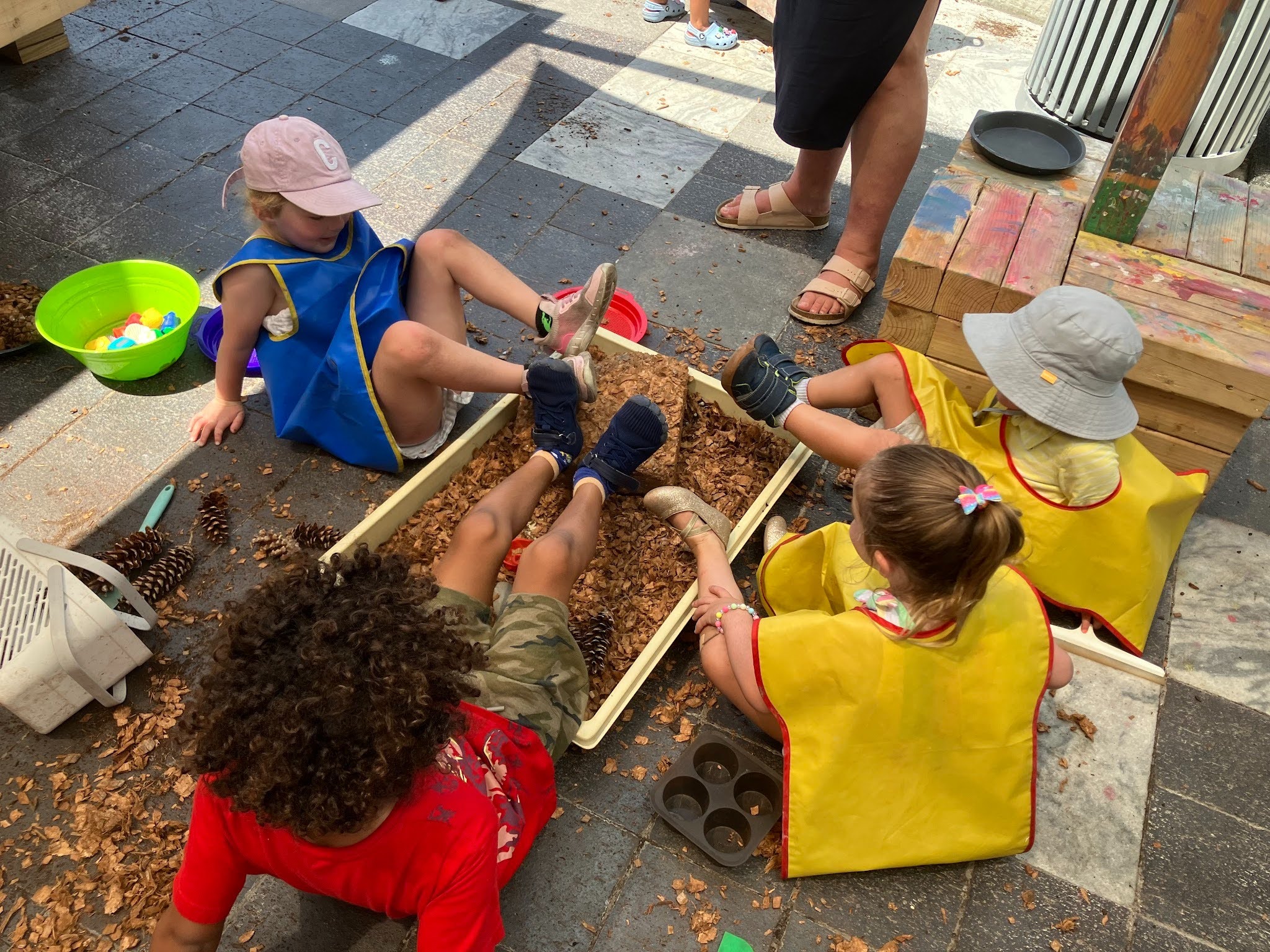
That being said, there is more to Being Playful than just having fun. When we approach things with humor and whimsy, it is easier to express our creativity. Last summer, I had the opportunity to facilitate play in the Curiosity Kitchen, the Museum’s outdoor, messy-play, temporary exhibit. Every day, we would set up a different kind of messy material – from mud to paint to oobleck – and every day I would be surprised at the creative ways children found to used said materials. They tried just about anything you can think of and more! Of course, being called a kitchen meant there was plenty of mud-pie baking and pretend cooking going on. But I also played with children as they made homes for toy farm animals and washed them in soapy, bubbly water or used spatulas and fingers to paint masterpieces on the sides of the building. Children were constantly using their imaginations to come up with silly ideas to try out with our messy materials. One of my favorite memories from Curiosity Kitchen was the first day we tried to play with mulch, only to find out that it came as a big, compressed block and not loose. At one point, four children and I were using every tool available to us to try and break the block apart. It was so fun to mess around with the all the options and break off pieces using a whisk or a spatula or a shovel! The children even tried to use their feet and stomp the mulch apart. We were playing, but in trying to break apart the mulch block we had to used our creative problem solving skills as well.
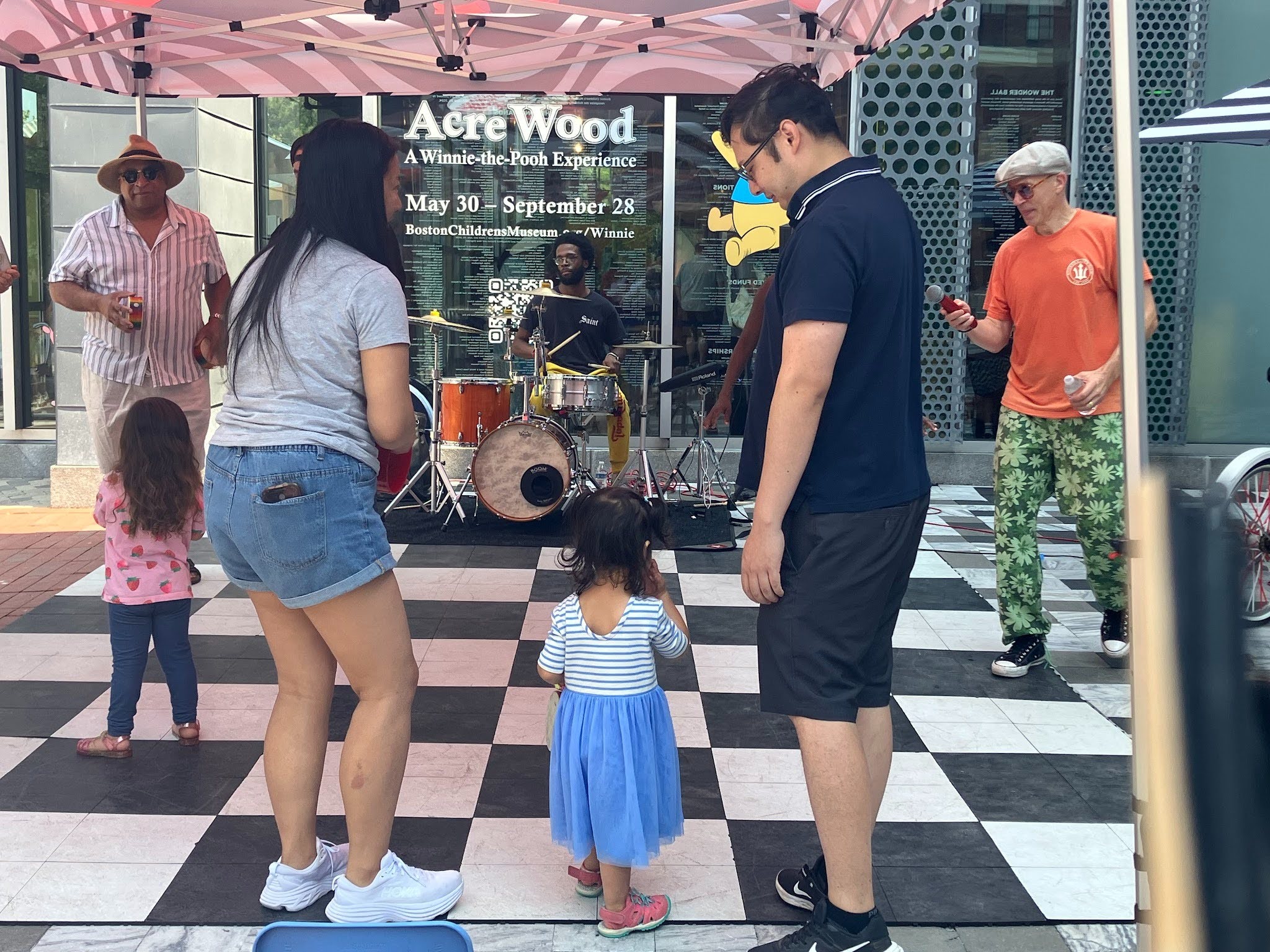
Finally, I wanted to highlight one of my favorite ways to be playful at the Museum: dance parties! There is nothing better than dancing with friends or bopping along to the music, waving a colorful scarf. Not only is dancing fun, but it is a form of self-expression. There’s no wrong way to dance, so you can do it however you like and dance to whichever songs you like to. At the Museum, we do dance parties at all kinds of events, because dancing isn’t limited to any particular time or place. During Dress to Express, a seasonal program in KidStage, we dance while dressing up and playing pretend, using the props to imagine who we want to be. Last summer, we danced with A Trike Called Funk to see how we can put different steps together to make our own rhythms on Juneteenth. And just this past autumn, we did the Monster Mash in the Pumpkin Patch of Play, having fun and enjoying the seasonal music. What I especially love about dance parties is that it can take children a minute to warm up to them, so often the adults step in and start dancing first. Children don’t often get to see grown-ups acting silly and having a blast, so I love that our dance parties encourage both children and adults to have fun and be playful.
Play is a fundamental part of learning and growing. It is why we do what we do here at the Museum. Being playful can look different for every person, whether it involves moving your body, getting messy, creating something beautiful, or something else entirely. What’s important is that play helps us to express who we are and practice our creativity in a way that is silly or whimsical or just plain fun.


