
Written By: Andrew Meeker, Museum Program Fellow
Next up in the Habits of Mind Series: Respecting Self and Others. At Boston Children’s Museum, we define Respecting Self and Others as, “Having dignity and compassion for oneself, exhibiting those same feelings towards others, and responding open-mindedly to different ideas and values.” Let’s see how this Habit of Mind comes into play throughout the Museum!
“Thank you for being responsible and respectful to the space,” said a second grade teacher after two of her students tidied up the Japanese House exhibit’s kotatsu and futon at the end of her class’s field trip session. The two students straightened out pillows and blankets that had been moved around by classmates who tested out these furniture pieces. I admired how this teacher so eloquently emphasized the courtesy of these two students, especially after her class approached the information they were learning about Japanese culture with open minds.
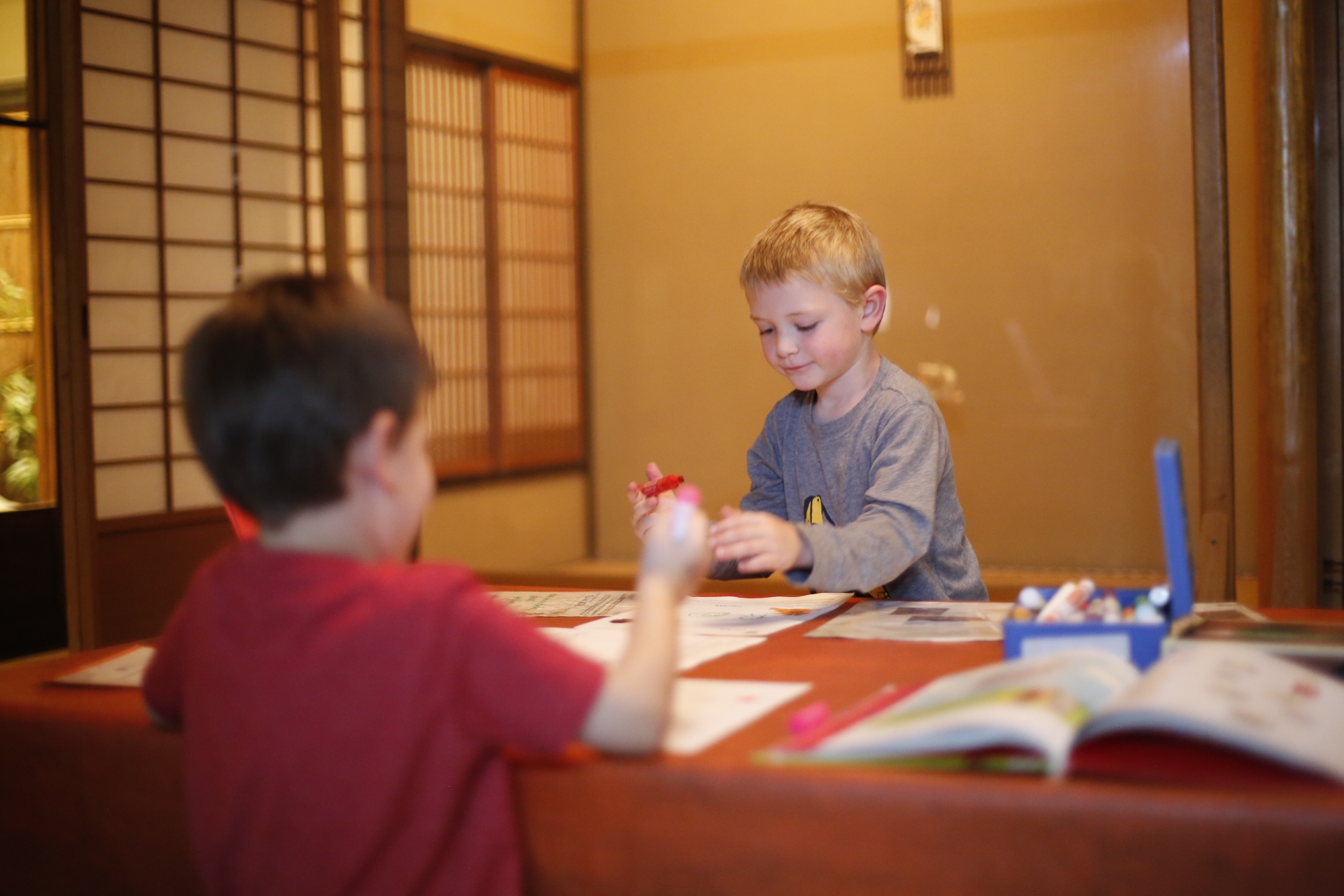
We began the field trip program with a demonstration with a globe in which two students put their fingers on Boston and Kyoto, the city where the Museum’s 19th-century machiya style home was built in the 1880s. By prompting students to take an active role in understanding how far apart the two sister cities are, we helped them experience wonder about people who live thousands of miles away from them. This kind of moment highlights how visitors can respect others while encountering different points of view within our programs and exhibits. Respecting the self and others is one of eight learning skills called the Habits of Mind that we promote at Boston Children’s Museum. It is important for us as a child-led learning center to support the growth that is already occurring in the rest of our visitors’ lives.
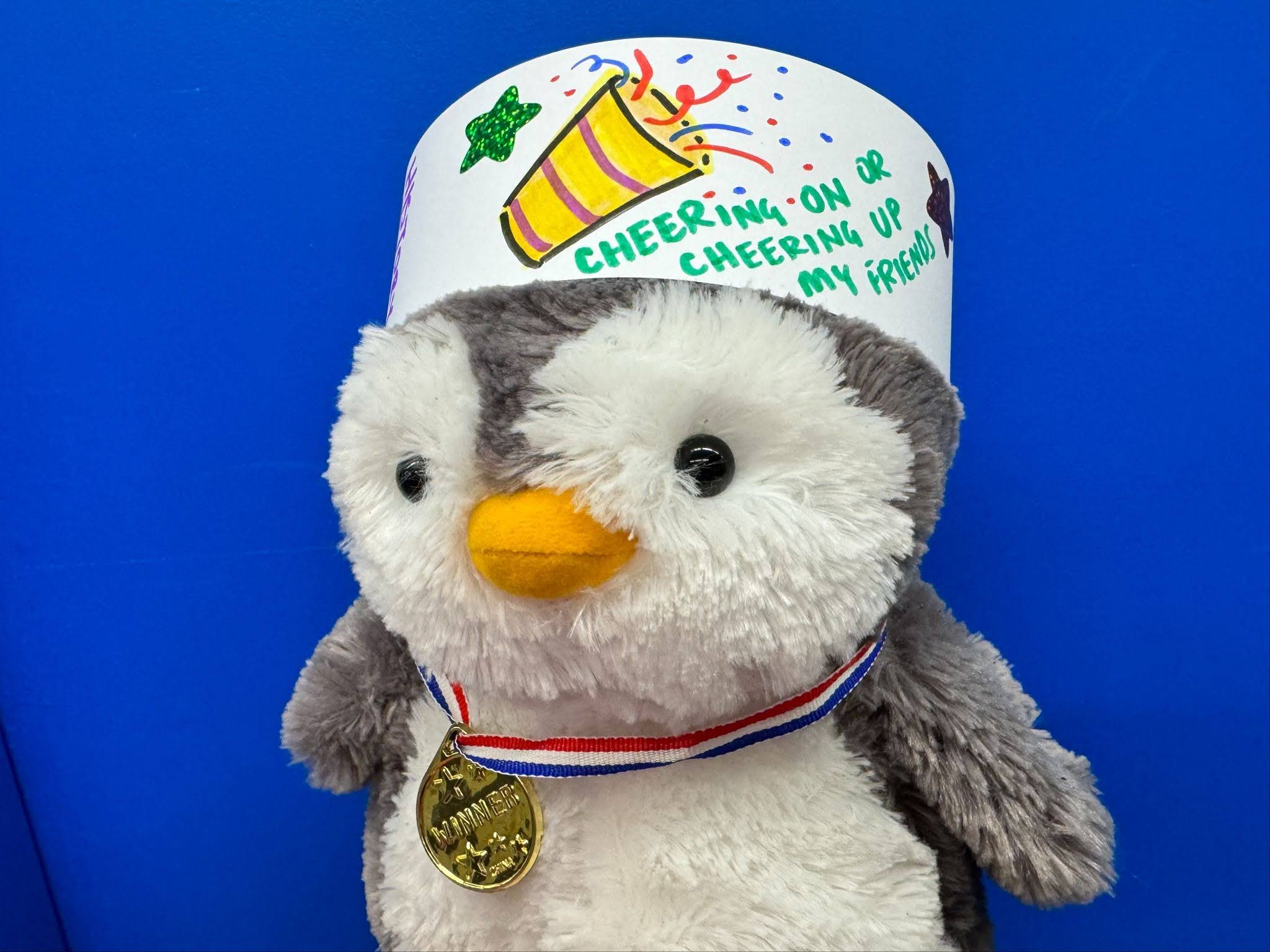
The ways that we foster respect for the self at the Museum often take form as confidence-building exercises. In You, Me, We!, an exhibit that grapples with questions related to identity and bias, I assisted a program called “This Generation Confident: Know-A-Lots.” To support self-esteem development among our visitors, we invited them to make paper crowns with things they were good at or knew a lot about. A 6 year-old child who participated in the program was a true master of self-respect. As her crown filled up with drawings, she exclaimed: “I’m good at so many things!” Throughout the activity, I couldn’t help but smile as she continued to express positive thoughts about herself. When the child finished her crown, we gave her star stickers to put next to each drawing on the crown, showing that each one of these things deserved to be celebrated. At the Museum, we urge children to treat themselves with respect so they readily extend these same feelings to others.
Our visitors show respect to each other everywhere, even when it is not the explicit goal of the program. On Wednesdays, Museum educators run a program called “STEAM Sprouts” that invites visitors who are 3 and under to explore exciting tools and materials. One week, visitors played with a mixture of baking soda and water that we call “snow dough” because it looks and feels like snow. Accompanied by a variety of colorful little silicone molds, the snow dough was contained within a sensory table with a deep basin.
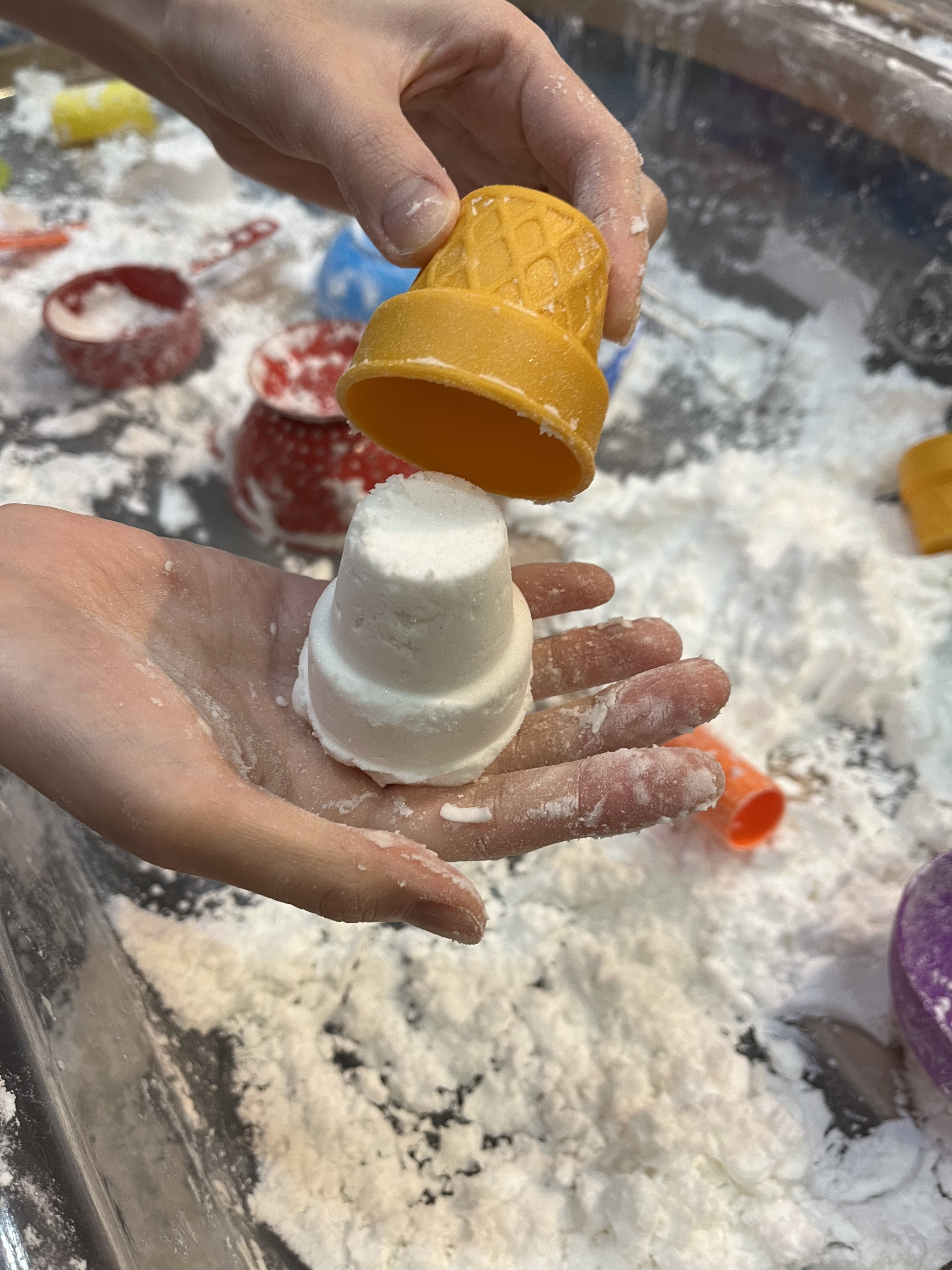
Among this selection was a red heart-shaped cake mold, and a 3 year-old child kept packing the snow dough into this mold and handing it to another child’s caregiver. Every time that the child walked around the table and presented the heart-shaped cake as a gift, the caregiver would gasp and say “Thank you!” before pretending to gobble it up. No matter how many times the child came up with the same cake, the caregiver responded with the same level of enthusiasm. I was super impressed by this caregiver’s patience and kindness; repeating simple tasks can get really old really fast for adults. Her efforts paid off because the child smiled and giggled after each of the caregiver’s expressive reactions! Receiving positive reinforcement from adults during play can help young children like this one understand how to establish new connections with others based on mutual respect.
Creating an atmosphere at Boston Children’s Museum where such respectful relationships are formed begins with the tone that the staff set every day. By leading with integrity and kindness in our interactions with visitors, we demonstrate the character-building value of the programs we offer. When we make visitors feel welcomed and valued, they will likely be more willing to collaborate with one another while they explore and play in the same exhibit spaces. It is important that we promote positive play because children’s capabilities to treat themselves and others with respect are developing during the 0-10 age range that most often visits the Museum. Incorporating respect as a Habit of Mind in the vast majority of our program and exhibit experiences ensures that our visitors flourish here. As children learn to respect themselves, their families, their friends, and their communities, they unlock so many opportunities for exploration and discovery in the world around them.


