
A kid-size stage with big impact
Written By: Sam Wong, Museum Program Fellow
One of my first memories of being in a theater was watching a puppet show at Long Island Children’s Museum. It was about George the Galapagos tortoise and his experience being the last of his kind. While the story was a little sad, the puppets and performers helped make it fun and memorable. My family and I went home and we renamed a stuffed animal George and recreated the play in a blanket fort. Over time I have grown to love the arts, both as an audience member and performer on stage.
Here at Boston Children’s Museum, I facilitate programming that supports children in their journey with theater. Many of these programs take place in KidStage, a fully functional kid-sized theater that offers shows and programming. The exhibit is designed as an introduction to theatrical and on-stage experiences. Visitors can draw from these memories as they move on to attend productions in different theaters, or perform themselves. Some children are scared of the new environment, others may stay a little longer. Some stay for the whole show. The key isn’t the duration of the interaction, but the practice of being open to possibilities, thinking creatively, and being brave.

Many of our youngest audiences participate in Wiggle Wednesdays. This 30-minute program invites children 0-3 years old and their caregivers to follow along with live music, sing, dance, and play with instruments and toys. Children work on their language skills, while exploring tempo and singing familiar songs at different speeds. The songs are accompanied with dancing or hand movement that support fine and gross motor skills. Toys such as puppets, bubbles and blocks encourage language and cognitive development. Caregivers seek out this seasonal program, making it part of their routine, and look forward to specific songs, activities and getting their wiggles out.

Another skill that we practice in KidStage is how to be open to possibilities. We offer a wide range of programs and performances, everything from musicals, dance, concerts – visitors might even encounter someone performing circus acts. Children can practice walking into a theater setting, finding their seat, and engaging with performers. Some caregivers are surprised when a change in setting helps their child sit and focus for longer than expected. The stage is a fun way to use familiar stories to share different art forms. Last March, for example, we worked with Boston Conservatory to present Red’s Most Unusual Day. This retelling of Little Red Riding Hood had kids on the edge of their seats, and laughing as the wolf performed opera and stole the park rangers clothing. Another way KidStage connects with children is through youth performers. Youth performers can help visitors tap into their aspirations, and inspire younger children to envision their hopes and dreams. Some of the older children develop interest in music, dance, performing, and even set design. We recently hosted youth performers from Wheelock Family Theatre who presented Don’t Let the Pigeon Drive the Bus! The Musical! The familiar story, colorful set and costumes, fun songs and puppets helped keep the audience’s attention. During one of the performance days, I remember a very young audience member staying for part of the show, leaving, then coming back to see the ending and have the actors sign their book. In KidStage audience members gain exposure to different art styles, sometimes feeling inspired as they see themselves reflected in the performance.
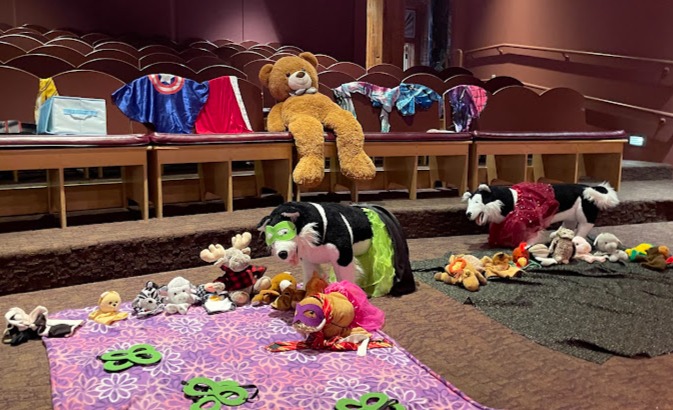
Children can also practice being brave, going on stage, and setting up their own performance with our Dress to Express program. During this program, we offer various adult and child-sized costumes, mirrors, and props such as stuffed animals and puppets. Visitors are invited to try on costumes to express who they are and explore what they can be. Children play pretend with each other and their caregivers. Some children are excited and jump right in, while others need a little more encouragement. When working with children who need a little more encouragement, I often offer costumes that they can put on a stuffed animal or their caregiver. Many children enjoy being silly and putting tutus on their adults or stuffed animal dogs. I found that imagining props can encourage creative thinking and move the story along. For example, I once pretended to build a snowman with two families attending Dress to Express. We rolled large spheres of invisible snow and then looked for carrots. A nanny pretended the stairs were mountains as we climbed up, dug a hole, and counted the pieces of imaginary coal together. In the end, we returned to the snow man and had a dance party. Anything can appear out of thin air through the power of creative thinking and imagination.
My hope for visitors in KidStage is for them to feel welcome to come and go as they please, while building their level of comfort within the space. Going to theaters, performing, and speaking in front of others can be scary. The stage is an opportunity to be open to possibilities, take risks, and be brave. I hope our work in KidStage ushers in the next generation of dancers, musicians, signers, and lovers of the arts.


